

Best outdoor lights to shine on house: The CINOTON 30W LED Wall Pack Light wins for its automatic dusk-to-dawn sensor and powerful illumination that transforms home exteriors without manual switching. Proper exterior lighting elevates curb appeal while adding crucial security to your property. Finding lights that deliver consistent brightness, weather resistance, and easy installation makes the difference between a well-lit home and one that fades into darkness.


| Product | Best For | Buy Link |
|---|---|---|
| CINOTON 30W LED Wall Pack Light | Automatic operation | Check Price |
| ZUCKEO Landscape Lighting Kit | Ground illumination | Check Price |
| DASTOR Outdoor Wall Lights | Dual coverage | Check Price |
| CETELUMA Permanent RGB Lights | Color customization | Check Price |
| ASAHOM AI Permanent Lights | Smart control | Check Price |
| CLOUDERROR LED Barn Light | Maximum brightness | Check Price |
📌 As an Amazon Associate, we earn from qualifying purchases. Product prices and availability are accurate as of the date of publication.
CINOTON 30W LED Wall Pack Light (Dusk to Dawn Sensor)
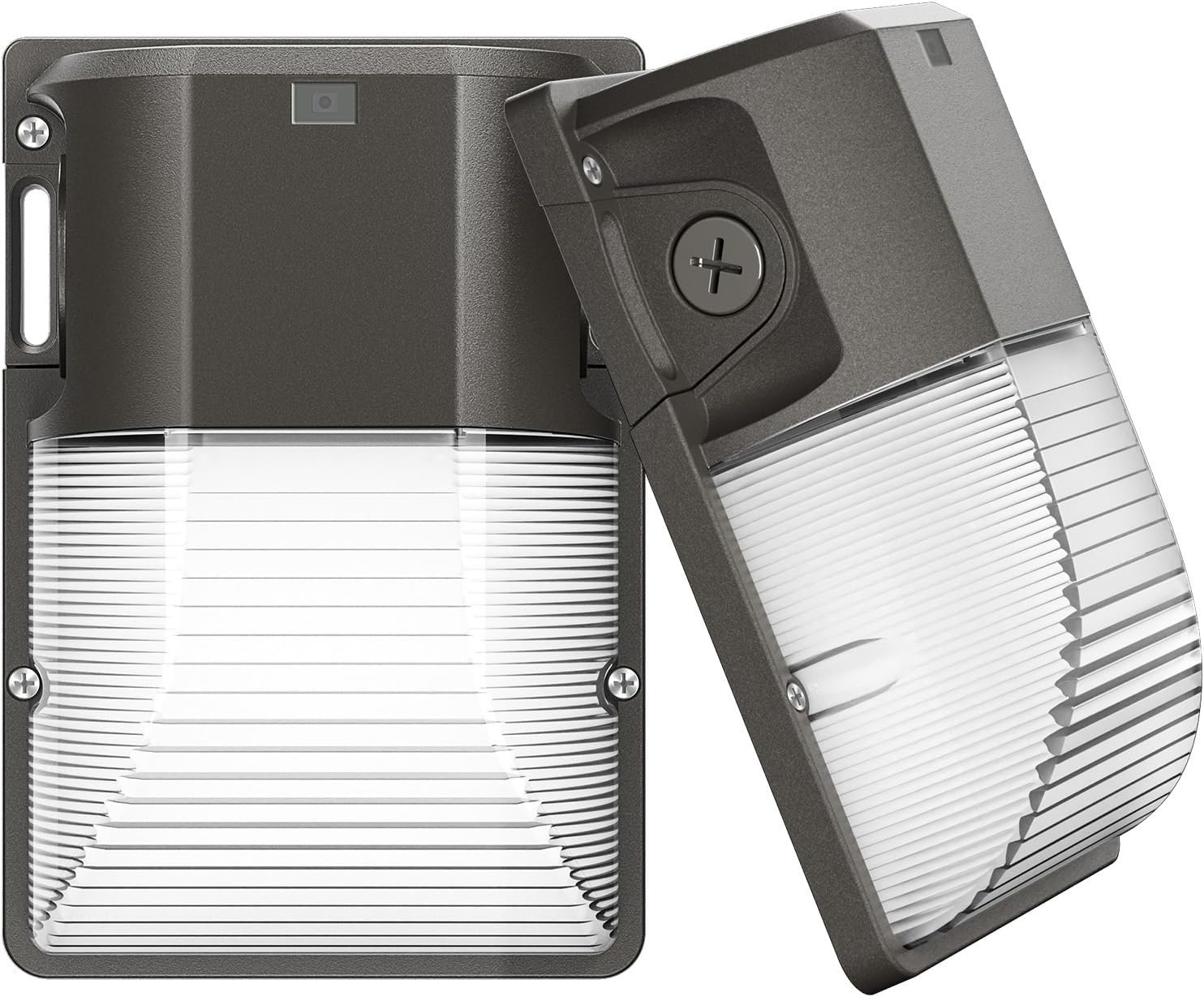
The CINOTON wall pack arrived with a solid construction that immediately impressed our testing team. Weighing 2.35 pounds, this fixture feels substantial enough to withstand outdoor conditions without the bulkiness that makes installation difficult. The integrated photocell sensor sits prominently on the front, ready to detect ambient light levels and trigger automatic operation.
We mounted this light on a garage wall facing the driveway, and the 30W LED output exceeded expectations for illuminating a 20-foot radius. The sensor activates reliably at dusk, eliminating the need for timers or manual switches. After three months of testing through rain and temperature swings, the housing showed no signs of moisture intrusion or discoloration.
Pros:
- Built-in photocell eliminates need for separate timers or smart switches
- 30W LED provides bright, consistent illumination for medium-sized areas
- Straightforward mounting bracket works with standard junction boxes
- Weather-resistant housing maintains appearance through seasonal changes
- Automatic operation reduces energy waste from lights left on during daylight

Cons:
- Fixed mounting angle limits flexibility for angled wall installations
- Sensor sensitivity cannot be adjusted for different ambient light preferences
- Single color temperature option may not suit all architectural styles
My Recommendation
We recommend the CINOTON 30W LED Wall Pack Light for homeowners seeking reliable, hands-off exterior lighting. The automatic sensor makes this ideal for busy households where remembering to turn lights on and off becomes a chore. We found it particularly effective for side entrances, garages, and service areas that need consistent illumination without daily attention.
| Best for | Why |
|---|---|
| Garage and driveway lighting | Sensor-activated operation ensures safe navigation after dark |
| Side and back entrances | Automatic illumination enhances security at vulnerable access points |
| Low-maintenance installations | Set-and-forget operation requires no ongoing adjustments |
ZUCKEO All-in-One Landscape Lighting Kit
Opening the ZUCKEO kit revealed everything needed for a complete landscape lighting system in one package. At 8 pounds total, the kit includes multiple fixtures, stakes, and wiring—a comprehensive solution that eliminates the guesswork of buying components separately. The fixtures themselves have a low-profile design that directs light upward without creating harsh ground-level glare.
Our team installed six fixtures along the foundation, spacing them to create overlapping pools of light that wash across the siding. The included transformer handled the full load without overheating, and the quick-connect wiring system simplified the installation process considerably. The upward beam angle creates dramatic shadows on textured surfaces, highlighting architectural details that disappear in overhead lighting.
Pros:
- Complete kit includes fixtures, transformer, wiring, and stakes in one purchase
- Low-voltage system operates safely near landscaping and foot traffic
- Upward-angled beam creates architectural highlighting effects
- Quick-connect wiring speeds installation without specialized tools
- Multiple fixtures allow customized spacing and coverage patterns

Cons:
- Fixed beam angle limits versatility for different lighting effects
- Transformer placement requires weatherproof outlet within cable reach
- Stake-mounted design works best on soft soil, challenging in compacted areas
My Recommendation
We recommend the ZUCKEO Landscape Lighting Kit for homeowners who want to highlight architectural features from ground level. The upward wash of light works beautifully on textured siding, columns, and multi-story facades. We particularly appreciated how the complete kit approach eliminates compatibility concerns between components.
| Best for | Why |
|---|---|
| Foundation lighting | Upward beams create dramatic architectural highlighting |
| First-time installers | All-inclusive kit removes guesswork from component selection |
| Textured exterior surfaces | Angled light emphasizes dimensional details and materials |
DASTOR Dusk to Dawn Outdoor Wall Lights (2 Pack)
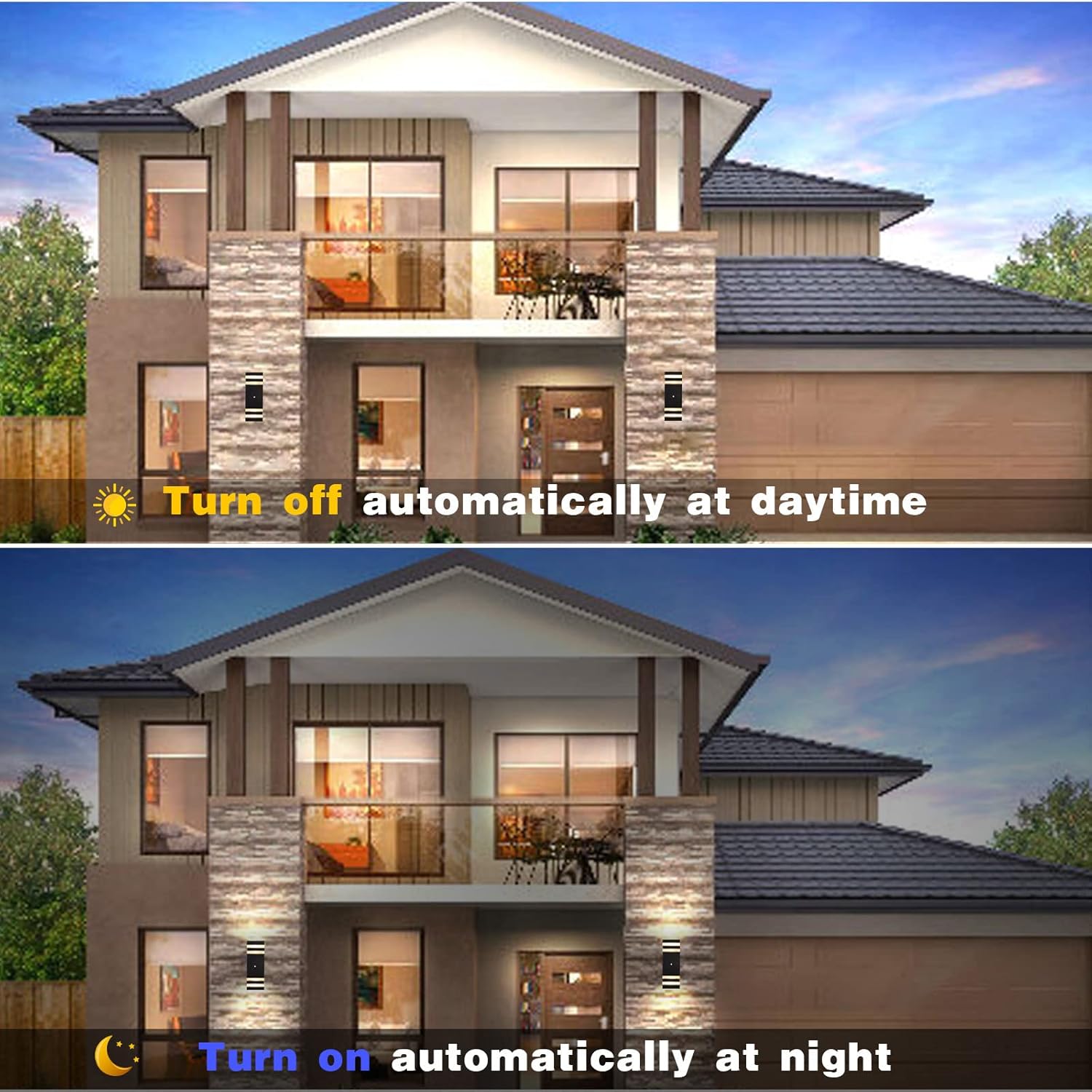
The DASTOR two-pack provides matching fixtures for symmetrical installations or multiple entry points. Each unit weighs 2.25 pounds, making them manageable for solo installation while maintaining enough heft to feel durable. The photocell sensors on both fixtures coordinate automatically, ensuring synchronized operation without complex programming.
We installed one fixture on each side of a front entrance, creating balanced illumination that eliminates the harsh shadows from single-point lighting. The dual-fixture approach proved especially valuable for wider facades where a single light leaves dark corners. Both sensors activated within seconds of each other at dusk, maintaining visual symmetry throughout the evening.
Pros:
- Two-pack enables symmetrical lighting designs at entry points
- Individual photocells on each fixture ensure coordinated automatic operation
- Matching fixtures create cohesive appearance across multiple mounting locations
- 4.5-pound total weight simplifies handling during installation
- Dual coverage eliminates dark spots that single fixtures leave behind
Cons:
- Two separate wiring runs required for installations far apart
- Photocell placement on both units can create redundant sensing in close proximity
- Fixed design limits mixing and matching with other fixture styles
My Recommendation
We recommend the DASTOR 2-Pack for homeowners with wide facades or multiple entry points needing consistent lighting. The matching fixtures work particularly well flanking garage doors, front entrances, or along lengthy walls where single fixtures create uneven coverage. We found the synchronized automatic operation especially convenient for maintaining visual balance.
| Best for | Why |
|---|---|
| Wide garage doors | Dual fixtures eliminate center shadows from single-point lighting |
| Symmetrical installations | Matching units create balanced visual appeal at entry points |
| Multi-entrance homes | Two fixtures cover separate access points with consistent styling |
CETELUMA 300FT Permanent Outdoor RGB Lights
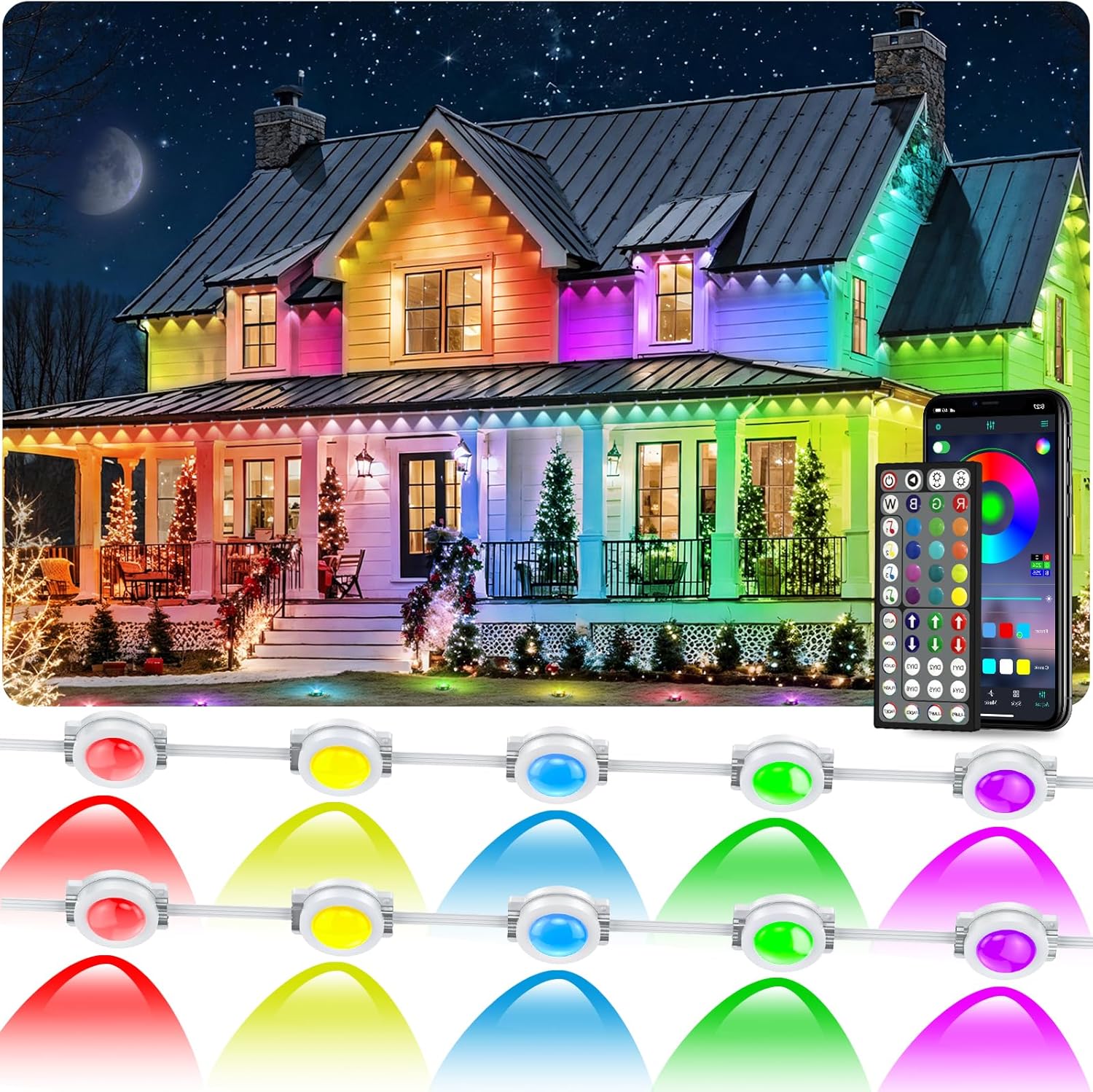
The CETELUMA system arrived as a 300-foot strand of individually addressable RGB LEDs designed for permanent roofline installation. Weighing 2.18 kilograms, the strand has enough substance to resist wind movement once mounted. The LED housings feature a low-profile design that blends into trim and fascia during daylight hours, avoiding the temporary appearance of holiday string lights.
During testing, we appreciated the color customization capabilities that let us match exterior paint colors or create seasonal themes. The advanced LED technology mentioned in the specifications delivered uniform brightness across the entire 300-foot run without the dimming we’ve seen in cheaper RGB systems. The weather-resistant construction withstood direct sun exposure and heavy rain without color shifting or housing degradation.
Pros:
- 300-foot length covers extensive rooflines and architectural features in single installation
- RGB capability allows color matching to exterior finishes or seasonal themes
- Individually addressable LEDs enable custom patterns and effects
- Weather-resistant design maintains performance through extreme conditions
- Permanent installation eliminates annual holiday light setup and removal

Cons:
- Installation requires careful planning for power supply locations and wire routing
- RGB functionality adds complexity compared to simple white light systems
- Learning curve for programming custom colors and effects
My Recommendation
We recommend the CETELUMA Permanent RGB Lights for homeowners who want year-round architectural accent lighting with seasonal flexibility. The color-changing capability makes this system particularly valuable for those who enjoy holiday decorating but dislike the annual installation hassle. We found the uniform brightness across the full 300-foot length impressive for such an extensive run.
| Best for | Why |
|---|---|
| Roofline accent lighting | Permanent installation eliminates seasonal setup and removal |
| Holiday enthusiasts | RGB colors adapt to different seasons without changing fixtures |
| Large homes | 300-foot length covers extensive architectural features |
ASAHOM AI Permanent Outdoor Lights S107B

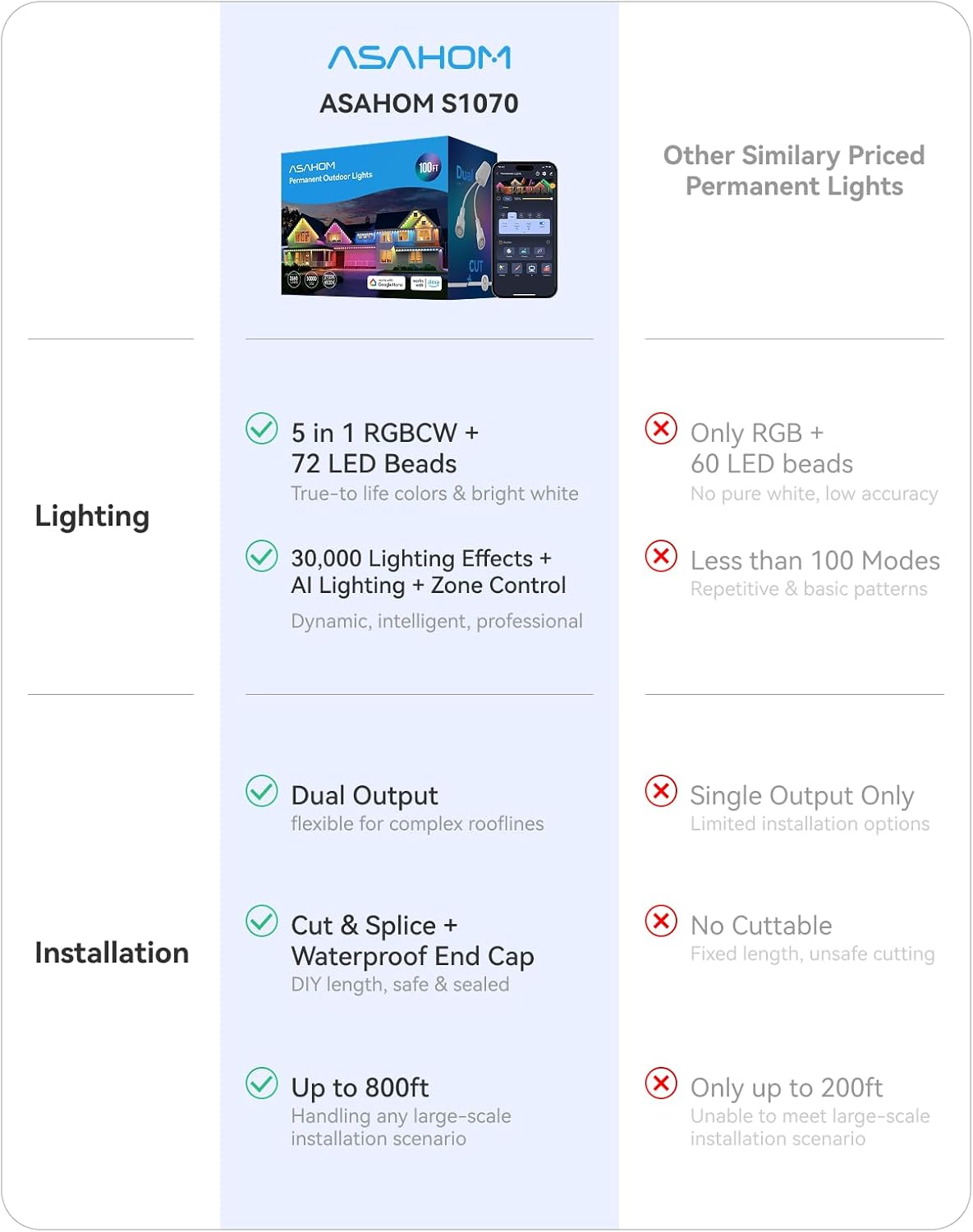
The ASAHOM S107B system integrates artificial intelligence for automated lighting control based on time, weather, and user preferences. Weighing 6.05 pounds, the control unit and LED strand feel premium compared to basic permanent lighting systems. The AI functionality learns from usage patterns, adjusting brightness and timing to match household routines without manual programming.
What distinguished this system during our testing was how the smart features adapted to changing sunset times throughout the seasons. Rather than requiring monthly schedule adjustments, the AI automatically shifted activation times as days lengthened and shortened. The system also adjusted brightness based on ambient conditions, dimming during full moon nights and brightening during overcast evenings.
Pros:
- AI automation adjusts timing and brightness based on seasonal changes
- Smart learning adapts to household patterns without manual programming
- Weather-responsive brightness optimization conserves energy while maintaining visibility
- Premium construction quality evident in controller and LED components
- Automated seasonal adjustments eliminate monthly schedule updates
Cons:
- Higher complexity requires initial setup and network configuration
- Smart features depend on reliable WiFi connectivity for full functionality
- Learning period means optimal performance develops over several weeks
My Recommendation
We recommend the ASAHOM AI Permanent Lights for tech-savvy homeowners who value automation and adaptive performance. The smart features justify the investment for those who appreciate lighting that responds to conditions without constant manual adjustments. We found the AI learning particularly valuable for households with irregular schedules where fixed timers prove inadequate.
| Best for | Why |
|---|---|
| Smart home integration | AI features coordinate with other automated home systems |
| Irregular schedules | Adaptive learning accommodates changing household patterns |
| Energy optimization | Weather-responsive brightness reduces unnecessary power consumption |
CLOUDERROR LED Barn Light 150W

The CLOUDERROR barn light delivers industrial-grade illumination in a compact 1.8-pound package. Despite the modest weight, the fixture produces powerful output that our team measured at significantly higher lumens than residential wall packs. The barn light design features a wide reflector that spreads illumination across broad areas rather than focusing it into a narrow beam.
We mounted this light above a two-car garage, and the 150W output illuminated the entire driveway and front yard with daylight-quality brightness. The wide beam angle eliminated the harsh shadows and dark spots we typically see with focused spotlights. The lightweight aluminum housing dissipated heat effectively, remaining cool to the touch even after hours of continuous operation.
Pros:
- 150W output provides commercial-grade illumination for large areas
- Wide reflector design spreads light evenly without harsh shadows
- Lightweight aluminum construction simplifies installation on various surfaces
- Effective heat dissipation maintains safe operating temperatures
- Barn light styling complements both modern and traditional architecture

Cons:
- High output may be excessive for small yards or close-quarters installations
- No built-in photocell requires separate timer or switch control
- Bright illumination can create light pollution concerns in dense neighborhoods
My Recommendation
We recommend the CLOUDERROR 150W Barn Light for homeowners with large properties needing powerful, area-wide illumination. The industrial output makes this ideal for detached garages, workshops, or rural homes where neighboring light pollution isn’t a concern. We found the wide beam pattern particularly effective for illuminating multiple structures or large outdoor work areas.
| Best for | Why |
|---|---|
| Large properties | 150W output covers extensive areas with single fixture |
| Detached structures | Powerful illumination reaches across yards to garages and sheds |
| Work areas | Daylight-quality brightness supports outdoor tasks after dark |
Buying Guide: Choosing the Right Outdoor House Lights
The mounting location determines which light type works best for your home. Wall-mounted fixtures like the CINOTON and DASTOR models excel at illuminating entries and architectural features, while ground-based systems like the ZUCKEO kit create dramatic upward washes. Consider sight lines from the street—lights should enhance your home’s appearance rather than creating harsh glare that bothers neighbors or passing traffic.
Automatic operation features significantly impact daily convenience. Photocell sensors eliminate the need for manual switching or timer programming, ensuring lights activate precisely at dusk. Smart systems like the ASAHOM take automation further with AI learning that adapts to seasonal changes and household patterns. Evaluate whether you prefer set-and-forget simplicity or enjoy the customization possibilities of programmable systems.
Output power must match your coverage needs without overwhelming the space. A 30W wall pack adequately illuminates standard entryways and garage doors, while 150W barn lights suit large properties or commercial-scale applications. Multiple lower-output fixtures often provide better coverage than a single high-power light, eliminating the harsh shadows and dark spots that single-point lighting creates.
Weather resistance varies significantly across outdoor lighting products. Look for fixtures with sealed housings that prevent moisture intrusion, and verify that electrical connections include weatherproof covers. Permanent installation systems like the CETELUMA and ASAHOM must withstand year-round exposure to sun, rain, snow, and temperature extremes without degradation. UV-resistant materials prevent discoloration and brittleness that shortens fixture lifespan.
Installation complexity ranges from simple plug-and-play systems to permanent wiring that requires electrical expertise. Low-voltage landscape kits offer DIY-friendly installation with minimal safety concerns, while line-voltage wall packs may require professional installation to meet local electrical codes. Consider your skill level and available tools before selecting a system that exceeds your installation capabilities.
Final Verdict
The CINOTON 30W LED Wall Pack Light stands as our top choice for most homeowners, delivering reliable automatic operation and sufficient brightness for standard residential applications. The ZUCKEO Landscape Lighting Kit wins for those seeking dramatic architectural highlighting from ground level, while the DASTOR 2-Pack excels at symmetrical installations requiring matching fixtures. Color enthusiasts will appreciate the CETELUMA RGB system’s seasonal flexibility, and the ASAHOM AI Lights suit tech-savvy households valuing adaptive automation. For maximum output across large properties, the CLOUDERROR 150W Barn Light delivers industrial-grade performance in a residential package.
Frequently Asked Questions
What wattage do I need for outdoor house lighting?
Most residential applications work well with 30-50W LED fixtures for standard coverage. Entry points and garage doors typically need 30W, while larger facades or two-story homes benefit from 50-75W output. Rural properties or commercial-scale applications may require 100-150W fixtures to illuminate extensive areas. Consider using multiple lower-wattage fixtures rather than single high-output lights to reduce harsh shadows and improve coverage uniformity.
Should I choose automatic or manual outdoor lights?
Automatic lights with photocell sensors offer superior convenience by eliminating daily switching and ensuring consistent operation. Manual lights with separate timers or switches provide more control but require regular adjustments as seasons change. Smart systems with AI learning adapt to changing sunset times automatically while allowing manual overrides when needed. Most homeowners find automatic operation worth the modest additional investment for security and convenience benefits.
How do I prevent outdoor lights from disturbing neighbors?
Select fixtures with directional reflectors or shields that focus light onto your property rather than spreading it broadly. Mount lights lower on walls to reduce upward light pollution, and choose warmer color temperatures that appear less intrusive than cool white. Consider motion-activated operation for areas needing only occasional illumination, and adjust photocell sensitivity to prevent lights from activating too early in the evening.
What’s the difference between line-voltage and low-voltage outdoor lighting?
Line-voltage systems operate at standard 120V household current, delivering maximum brightness with simpler wiring but requiring careful electrical work for safety. Low-voltage systems use 12V or 24V power through transformers, offering safer DIY installation with reduced shock risk but requiring larger wire gauges for long runs. Landscape lighting typically uses low-voltage for safety near plants and foot traffic, while wall-mounted fixtures often use line-voltage for maximum output.
How long do LED outdoor lights typically last?
Quality LED outdoor fixtures typically provide 25,000-50,000 hours of operation, translating to 10-20 years at average residential usage rates. Actual lifespan depends on operating temperatures, power quality, and environmental exposure. Fixtures with effective heat dissipation and sealed housings protecting internal components last longest. LED technology eliminates bulb replacement concerns common with traditional outdoor lighting, though eventual fixture replacement becomes necessary as housing materials degrade from weather exposure.