

Look, I’m not going to sugarcoat it.
Living in a narrow space can feel… limiting. Like you’re constantly playing Tetris with your furniture.
But here’s what I’ve learned after years of experimenting with cramped layouts: narrow doesn’t mean you have to compromise on style. Or functionality. Or comfort.
I’ve tried everything. Moved my sofa seventeen different ways. Swapped dining tables more times than I can count. Made mistakes you wouldn’t believe.
The result?
15 solid ideas that actually work for a narrow living dining room combo. Not the Pinterest-perfect stuff that looks great but fails in real life. I’m talking about practical solutions I’ve tested in actual narrow spaces.
These aren’t about cramming furniture into impossible spots. They’re about creating a home that flows naturally. One where your living and dining areas work together instead of fighting for attention.
The best part? Most of these ideas won’t break the bank.
Whether you’re in a studio apartment, a narrow townhouse, or a compact condo, these strategies will help you create zones without walls. They’ll maximize your natural light. Add storage without the clutter.
And yeah, they’ll make your guests forget they’re standing in a tiny space.
Ready to stop fighting your layout and start working with it?
Let’s dive in.
1. Strategic Furniture Placement Along Walls
This one’s simple but powerful.
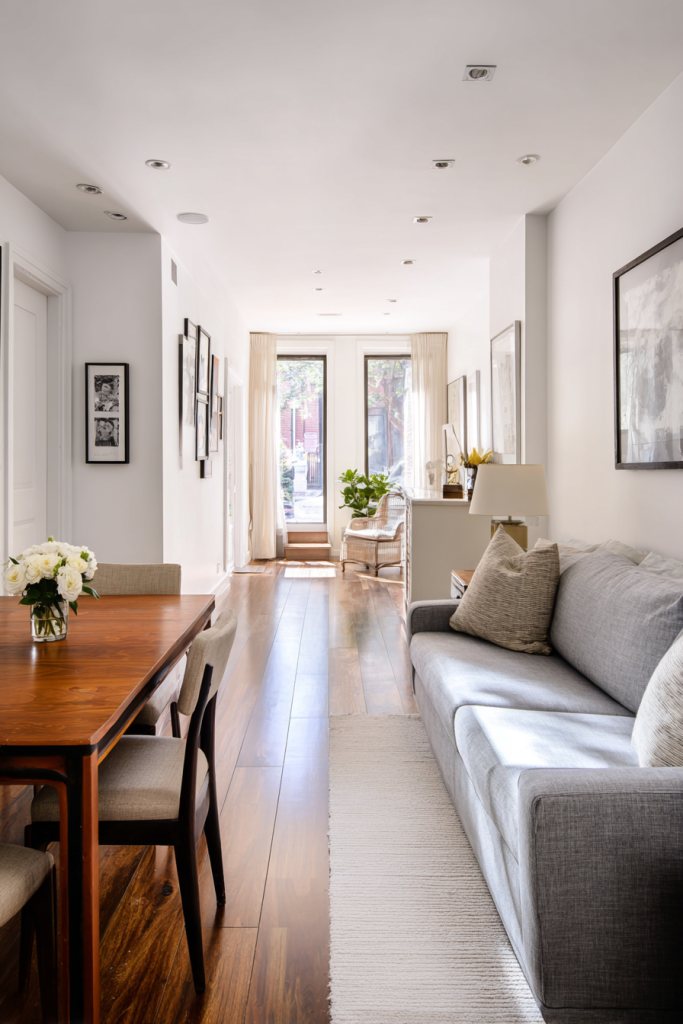
Push your bigger pieces against the longest walls. Sounds obvious, right? But you’d be surprised how many people don’t do this.
Here’s why it works: you create a clear pathway down the center. Your room instantly feels twice as wide.
For your living area: Place the sofa parallel to your longest wall.
For dining: Position your table against the opposite wall. Or perpendicular to it if that works better.
This creates natural zones without blocking movement. I always leave at least 36 inches of walkway space. Any less and you’re doing the sideways shuffle every time someone walks through.
Here’s a trick I use all the time…
Float your dining table slightly away from the wall when guests come over. Then push it back for daily use. This gives you flexibility without permanent changes.
Choose furniture with exposed legs instead of bulky bases. They create visual lightness. Make rooms feel less cramped.
The goal? Balance between filled and empty space.
2. Dual-Purpose Console Tables
Console tables are my secret weapon.
Seriously. If you only take one idea from this article, make it this one.
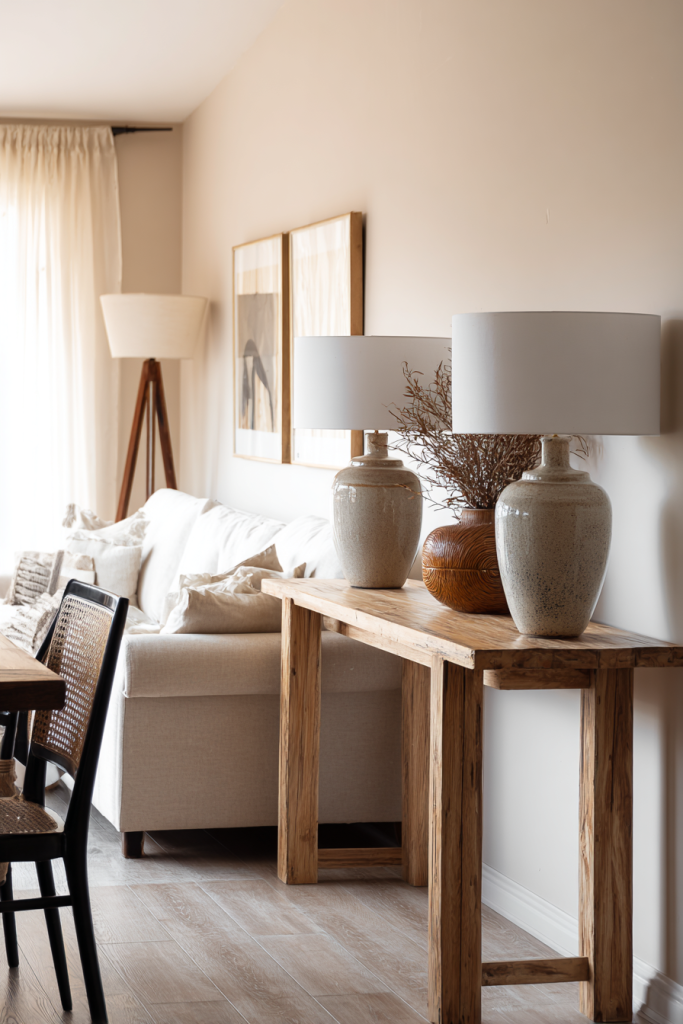
Behind your sofa, a console creates separation from the dining area. But it also gives you display space. Storage. Functionality without bulk.
Here’s what I love: Get a console that’s dining-table height.
Need extra seating for a dinner party? Pull up chairs to the back of the console. Done.
The rest of the time? It holds lamps, plants, whatever you want. And if it has shelves underneath, you’ve got storage for placemats, serving pieces, all that stuff you need but don’t know where to put.
Aim for something 10 to 15 inches deep. That slim profile doesn’t eat up floor space but still delivers major functionality.
The beauty of this approach is flexibility. Your space adapts to whatever your day demands.
3. Light Color Palettes with Strategic Contrast
Color is huge in narrow spaces.
I stick with light, neutral bases. Soft whites. Warm beiges. Pale grays. These colors reflect light and create airiness. They make walls seem to recede, visually widening your space.
But all-neutral can feel boring.
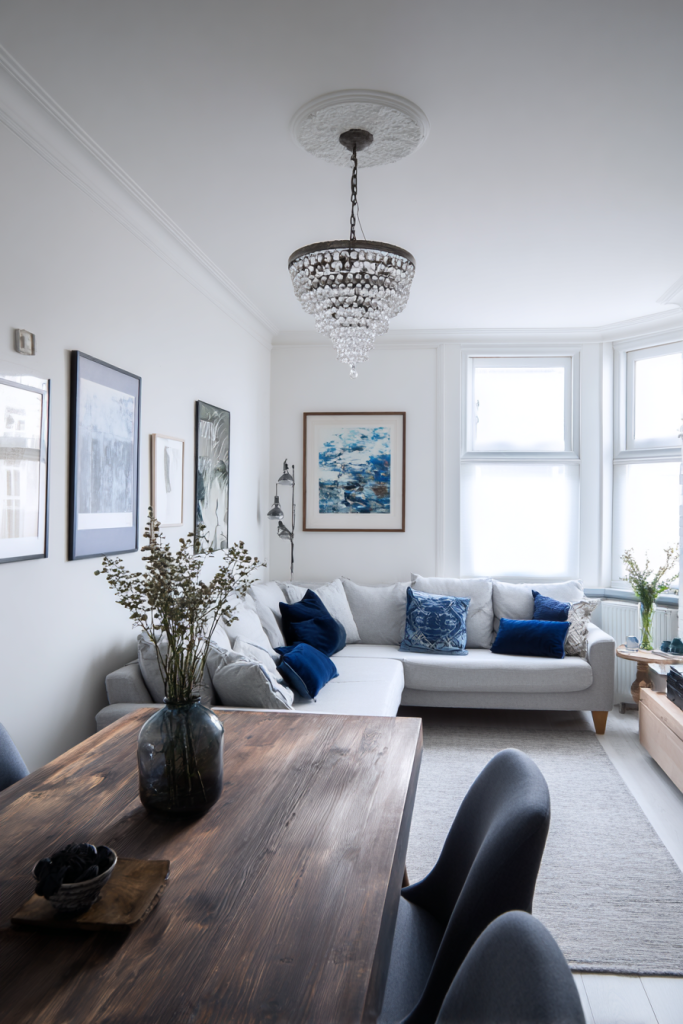
So I add contrast through accent pieces. A dark dining table against light walls? Perfect. It creates definition between zones without physically dividing them.
Rich navy or charcoal accent chairs add depth while keeping things sophisticated.
The key: Use darker colors intentionally. Not randomly.
I keep my walls, ceiling, and large furniture in the same light family. Then I introduce contrast through smaller stuff. Throw pillows. Artwork. A statement rug.
This creates visual interest while preserving that spacious feeling narrow rooms desperately need.
4. Vertical Storage Solutions
When floor space is limited, look up.
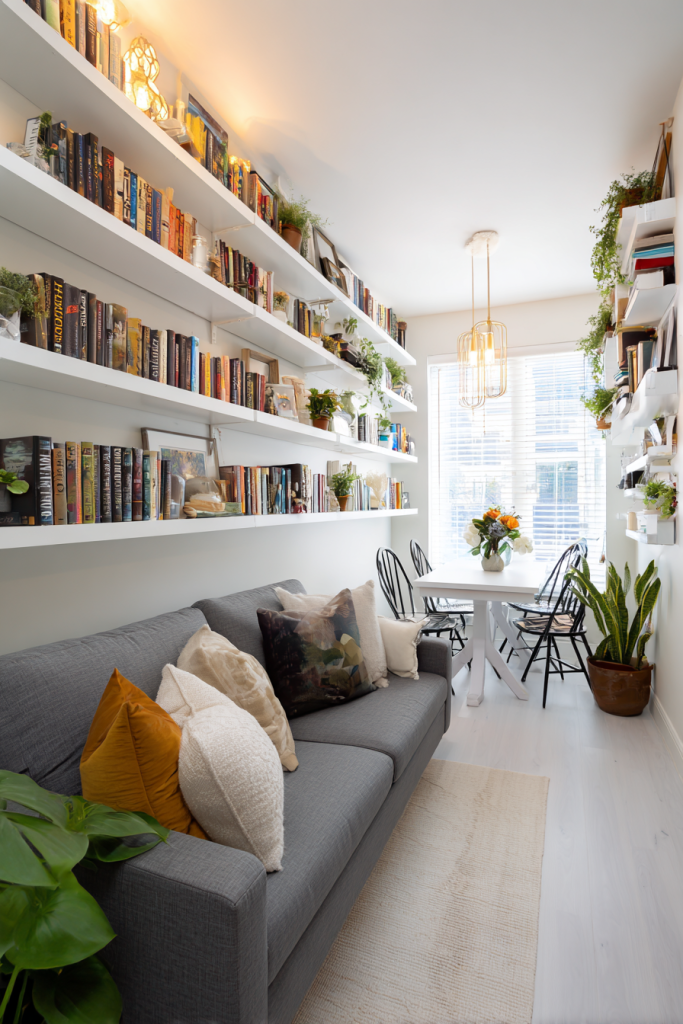
I maximize wall space with tall bookcases. Floating shelves. Wall-mounted cabinets that draw your eye upward.
This vertical emphasis makes ceilings feel higher. And you get tons of storage without consuming valuable square footage.
Install floating shelves above your sofa or dining table. Display books, plants, decorative objects.
A floor-to-ceiling bookcase in one corner? That stores everything from dinnerware to entertainment equipment. Plus it becomes an architectural feature.
These vertical elements add height that counteracts the narrowness of your room.
Pro tip: Choose open shelving over closed cabinets when possible.
Open shelves feel less heavy. They let light pass through. Just arrange items with intention and leave some negative space. You don’t want them looking cluttered.
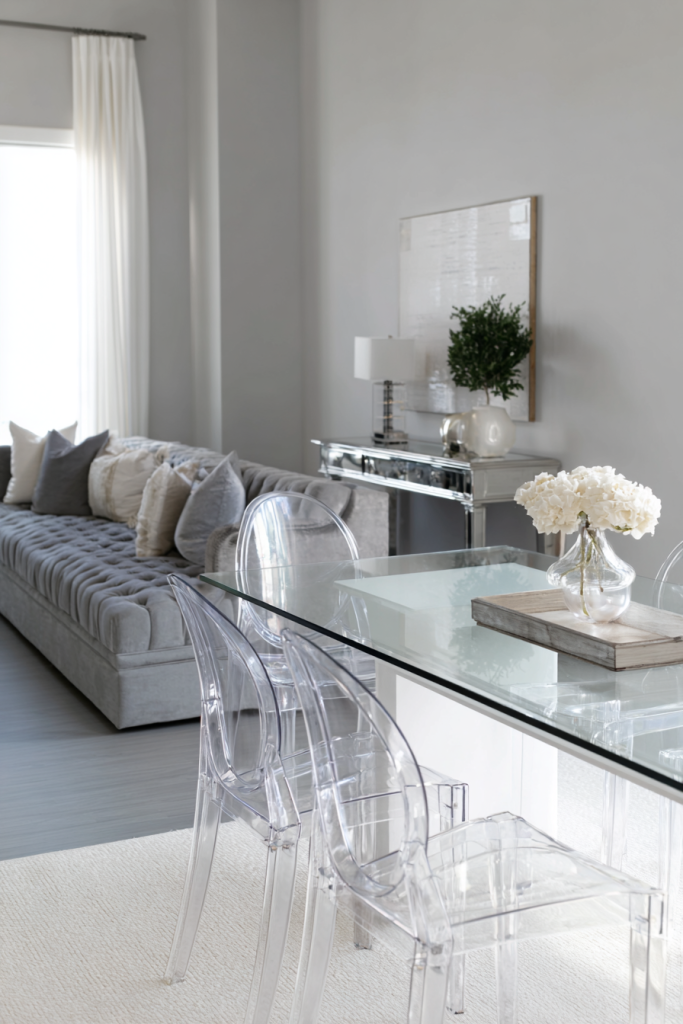
5. Transparent and Reflective Furniture
This is where things get interesting.
Furniture you can see through or that reflects light is transformative in narrow spaces.
Glass dining tables. Acrylic chairs. Mirrored surfaces. I use these whenever possible.
Why? They perform their function while creating visual continuity.
A glass-top dining table doesn’t create a visual barrier between your living and dining zones. Your eye travels straight through. It maintains the sense of a single, unified space.
Pair it with clear acrylic chairs that virtually disappear. Zero visual weight.
And mirrored furniture? Like a console with mirrored panels or a coffee table with reflective surfaces? It bounces light around the room.
This amplifies both natural and artificial light. Brightens your entire space.
The result is a room that feels larger and more luminous than its actual dimensions.
6. Multi-Functional Ottoman Solutions
Ottomans are incredibly versatile.
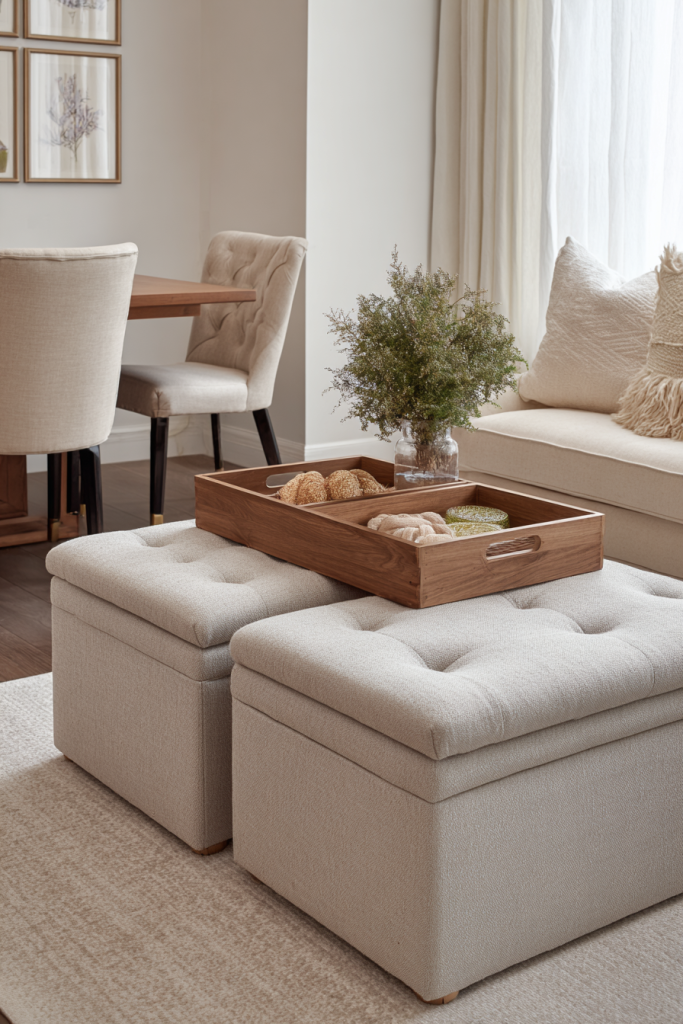
I use them constantly. Extra seating. Coffee tables. Footrests. Hidden storage. All while taking up minimal space.
Choose ottomans that work for both your living and dining areas.
My go-to setup: A large upholstered ottoman with a tray on top functions as a coffee table daily.
Guests arrive for dinner? Remove the tray. Boom. Additional seating.
Look for ottomans with lift-top storage inside. Stash blankets, magazines, dining linens. Whatever you need to hide.
I prefer ottomans on casters because they’re easy to move between zones. Cluster several small ones together for one purpose. Then separate them for another.
This flexibility is invaluable when you’re constantly adapting your space.
7. Strategic Lighting Layers
Lighting can make or break a narrow space.
And I mean break it.
Overhead lighting alone flattens your room. Makes it feel one-dimensional. But combining ambient, task, and accent lighting? That adds dimension that makes spaces feel larger and more dynamic.
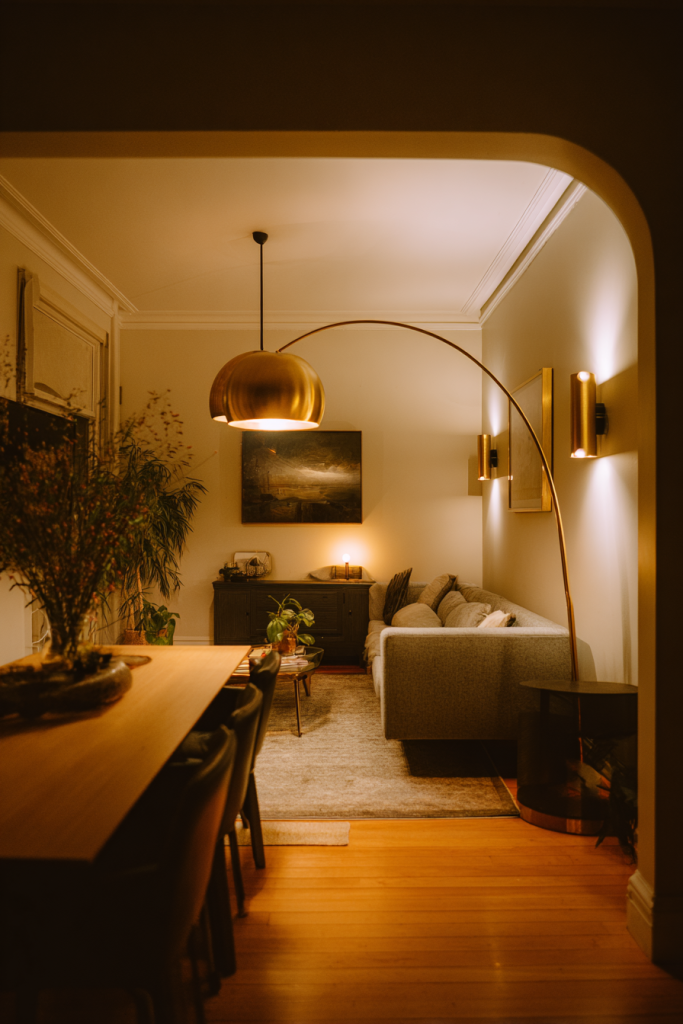
Start with this: A statement pendant light over your dining table.
This anchors the dining zone. Draws the eye upward. Creates definition.
Add a floor lamp beside your sofa for reading. That creates a cozy living area.
Then incorporate wall sconces or LED strip lighting under shelves. This ambient glow eliminates dark corners that make narrow rooms feel even smaller.
Dimmer switches are essential.
Bright light for morning coffee and meal prep. Softer light for evening relaxation. This control lets one space serve multiple purposes without physical changes.
Layer your lighting thoughtfully and watch your narrow room transform.
8. Bench Seating for Flexibility
Benches are absolute game-changers in narrow dining areas.
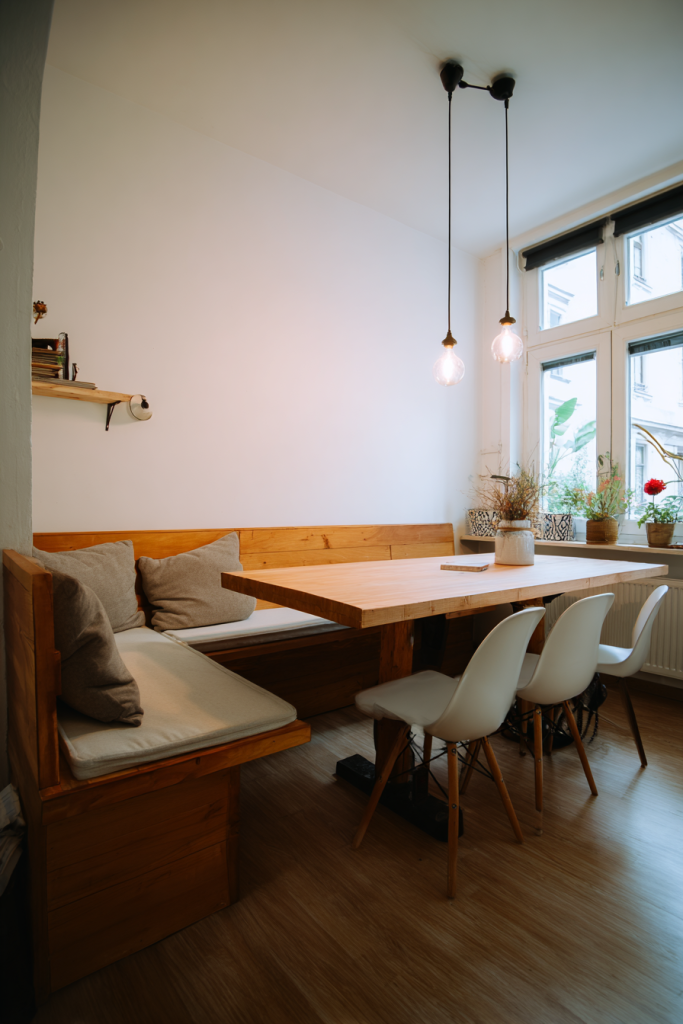
A bench against the wall seats more people than individual chairs. Uses less space. You can tuck it completely under the table when not in use, maximizing your walkway.
Here’s how I set it up: Place a bench on the wall side of your table. Chairs on the open side.
This asymmetrical arrangement feels intentional and modern. But it’s also highly practical.
Choose a bench with hidden storage underneath. Table linens. Small appliances. All that stuff you need somewhere to live.
But here’s the cool part…
Benches transition beautifully to your living area. When you’re not dining, a bench becomes a window seat. An extra perch for guests. Even a makeshift coffee table with a tray on top.
This versatility makes every piece of furniture earn its place.
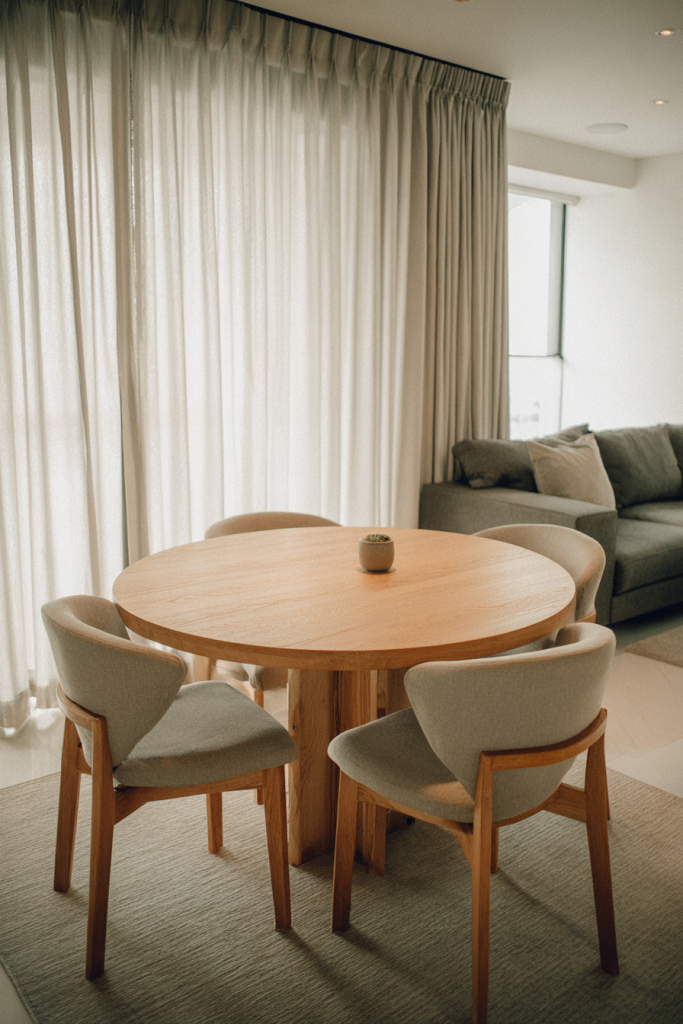
9. Round or Oval Tables
Sharp corners are your enemy in narrow spaces.
I always recommend round or oval dining tables. These shapes improve traffic flow dramatically because there are no corners to bump into.
You can walk around them from any angle. Navigation becomes effortless.
Plus, round tables foster better conversation during meals. Everyone faces each other equally.
In narrow rooms, this social aspect is valuable. It creates intimacy despite spatial limitations.
Choose a pedestal base instead of four legs. This maximizes knee room and seating flexibility.
Oval tables work if you need more surface area than a round table provides. But you still get the benefits of curved edges.
They fit nicely against walls or in the center of narrow rooms. Adapt to your layout needs while maintaining graceful flow throughout your space.
10. Sliding or Pocket Doors
Traditional swinging doors waste precious space.
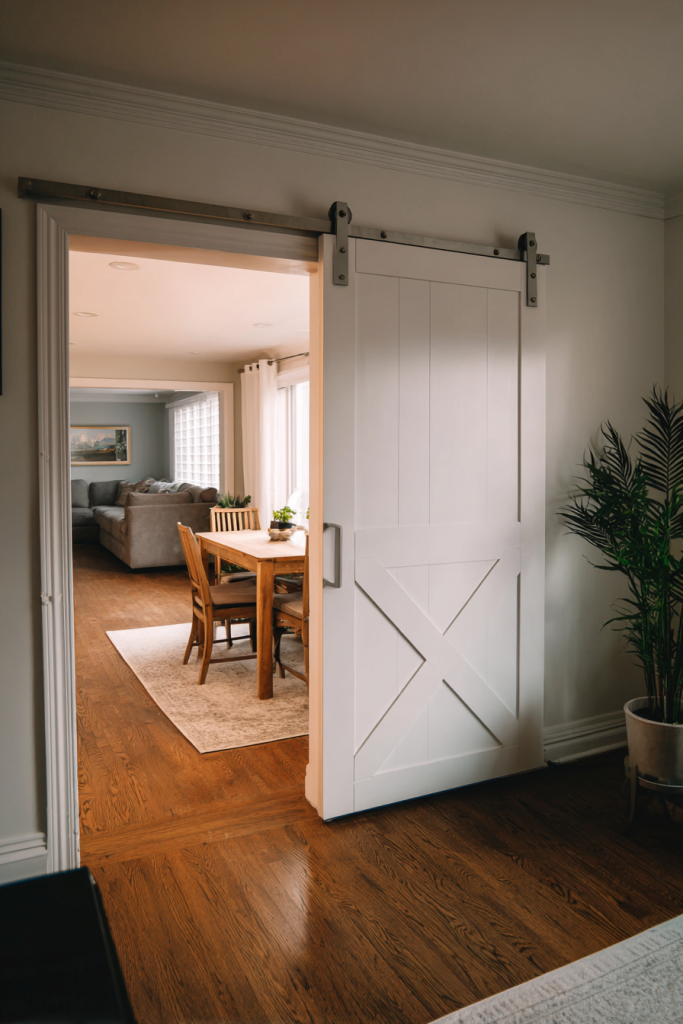
If your narrow combo space connects to other rooms, consider replacing them with sliding barn doors or pocket doors that disappear into the wall.
This simple change reclaims several square feet immediately.
Sliding doors add architectural interest while being highly practical. When open, they tuck against the wall. Completely out of your way.
When closed? Privacy. Separation. Without the swing radius traditional doors require.
Choose designs that complement your aesthetic. Rustic wood. Modern frosted glass. Sleek painted panels.
The space you gain by eliminating door swing…
That can accommodate a small bookcase. A bar cart. Or simply more breathing room.
Every inch matters in narrow layouts. This modification delivers significant functional improvements without major renovation costs.
11. Scaled-Down Furniture Pieces
Proportion is critical.
A massive sectional might be comfortable. But it overwhelms a narrow layout. Trust me on this.
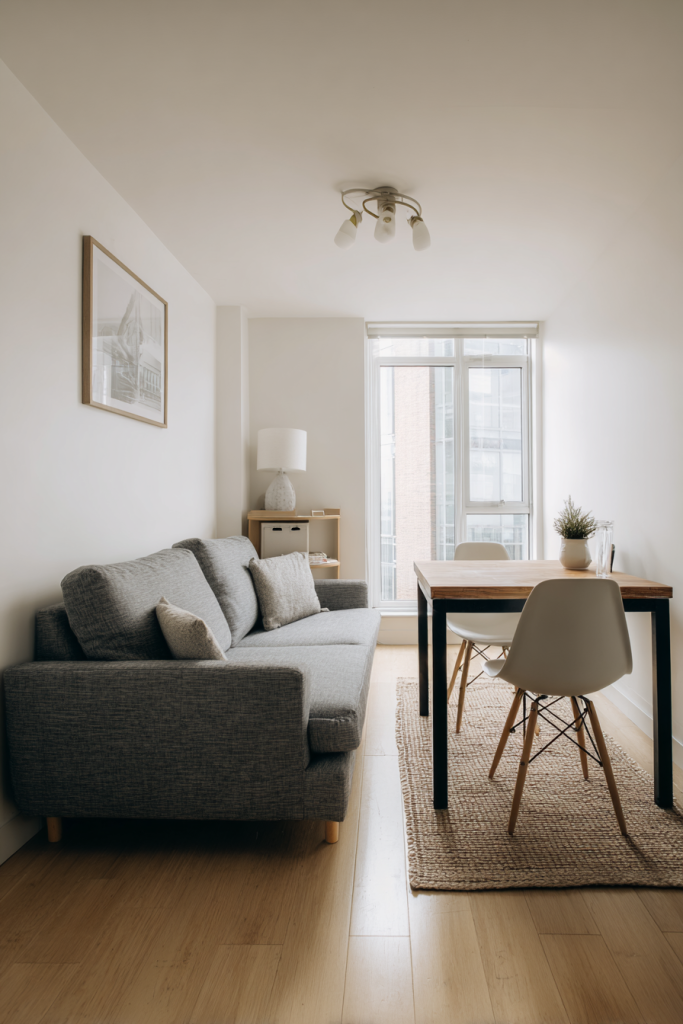
Instead, opt for apartment-sized sofas. Compact dining tables. Streamlined chairs that fit your space perfectly.
Look for furniture specifically labeled as “apartment-scale” or “small-space solutions.” These pieces are designed with narrower profiles and reduced depths.
A 72-inch sofa works better than an 84-inch one. A 36-inch wide dining table suffices for two to four people.
Don’t sacrifice comfort for size. But be realistic about what your space can handle.
Properly scaled furniture makes rooms feel intentionally designed. Not cramped.
Measure carefully before purchasing. Always leave adequate circulation space around each piece.
12. Cohesive Flooring Throughout
One of my favorite tricks?
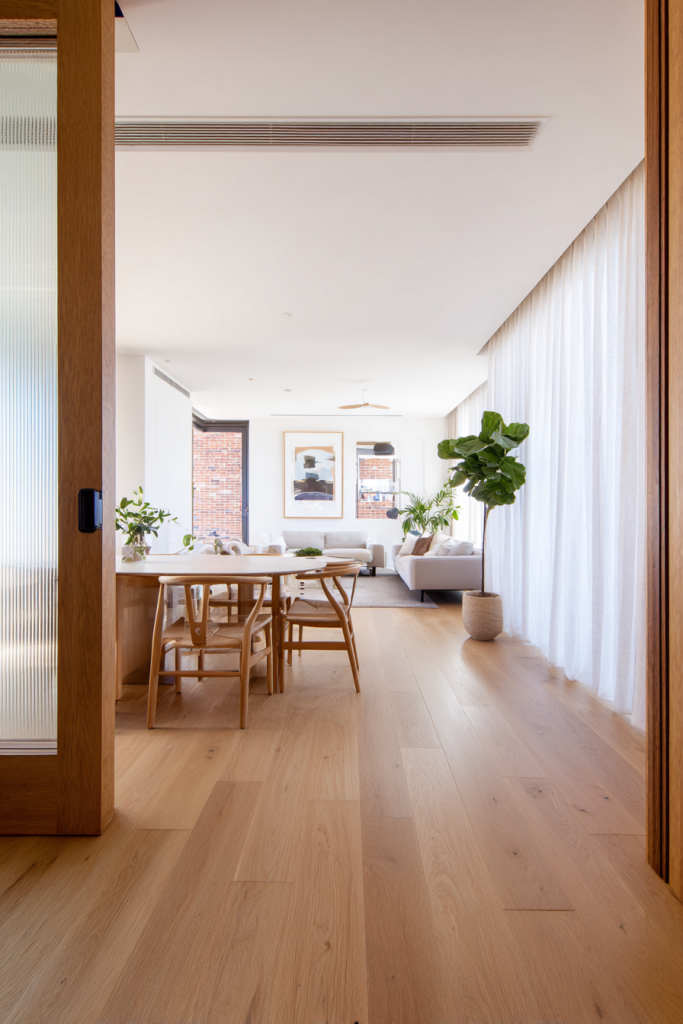
Using the same flooring throughout your living and dining areas.
When you eliminate visual breaks on the floor, your eye travels smoothly across the entire space. Creates a sense of continuity and expansion.
Whether you choose hardwood, luxury vinyl, or tile, keep it consistent.
Inherited different flooring? Consider adding a large area rug that spans both zones. Unifies them visually.
Choose light or medium-toned flooring that reflects light rather than absorbing it.
Avoid dividing your narrow space with different flooring materials or colors. This chops up the room and emphasizes its narrowness.
Cohesive flooring creates flow. Makes boundaries between zones feel natural rather than forced.
This subtle design choice has powerful visual impact.
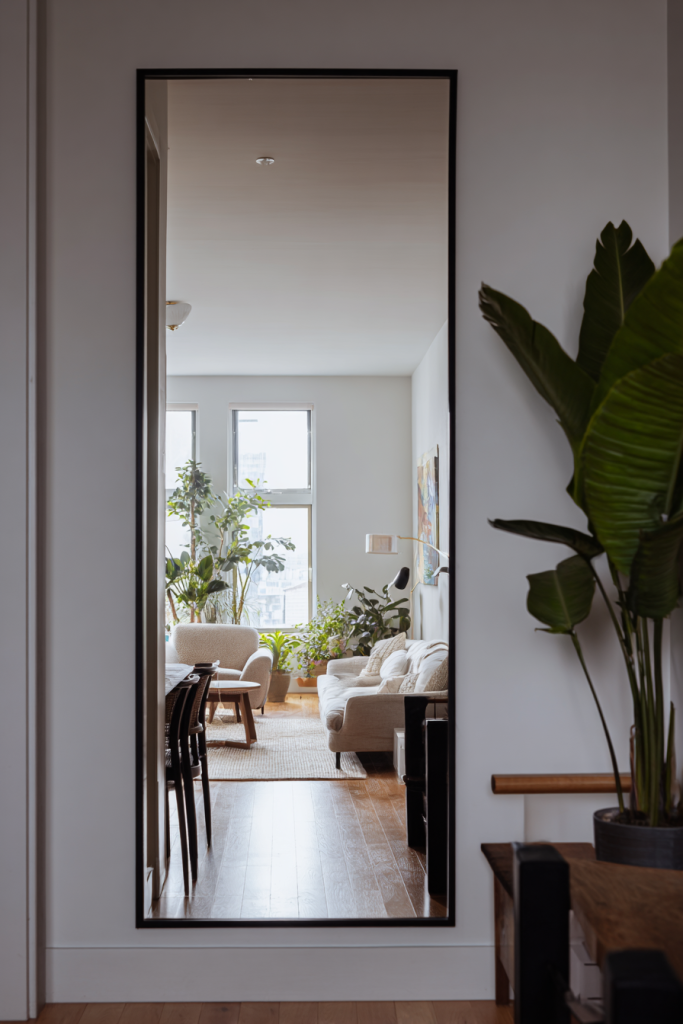
13. Mirrors Positioned Strategically
Mirrors are magical in narrow spaces.
But positioning them strategically is key.
A large mirror on a long wall reflects the room back on itself. Essentially doubling your visual space.
Place it opposite a window to bounce natural light deeper into your room.
In the dining area, a mirror behind the table creates drama. Makes the space feel more expansive.
For living areas, a mirror above the sofa or on a side wall adds depth without taking up floor space.
Choose frameless mirrors for modern spaces. Or frames that complement your decor style.
Avoid placing mirrors where they’ll reflect clutter.
Instead, angle them to capture your room’s best features. Architectural details. Attractive furniture. Natural light sources.
Strategic mirror placement transforms narrow spaces through illusion and light manipulation.
14. Built-In Window Seats with Storage
If your narrow space includes windows, capitalize on them.
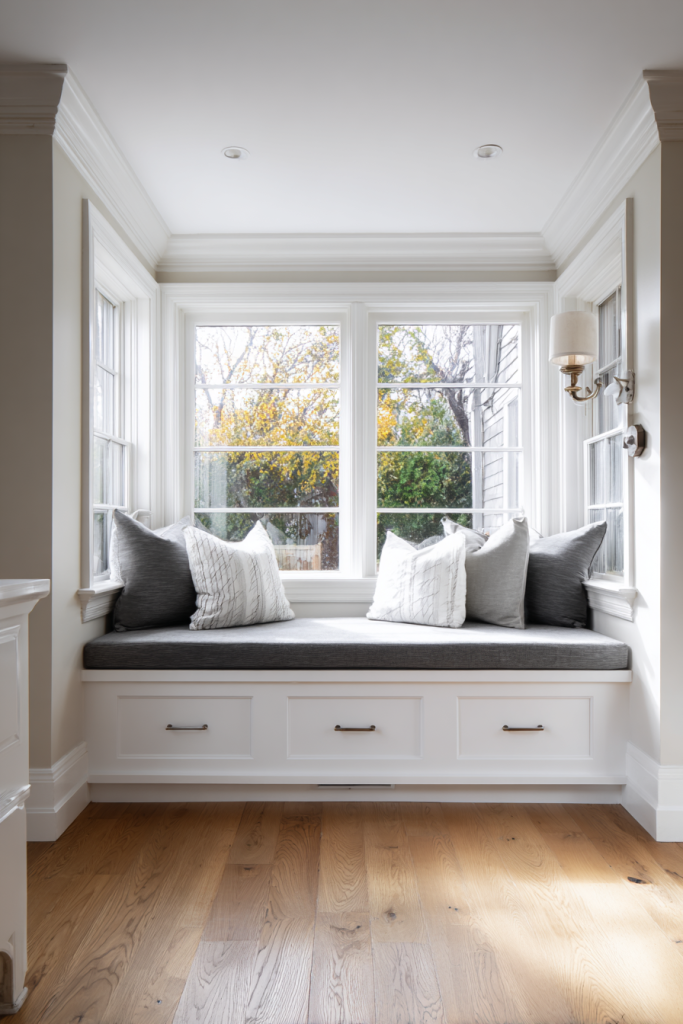
Built-in window seats provide seating, storage, and architectural charm. These custom additions maximize awkward spaces while adding character.
A window seat with lift-top storage holds seasonal items. Extra linens. Dining accessories. All while creating a cozy nook for reading or conversation.
Add cushions and throw pillows to make it comfortable and inviting.
Position it between your living and dining zones as a transitional element.
Built-ins feel permanent and intentional. They elevate your entire space.
While they require some investment, they solve multiple problems simultaneously. Storage. Seating. Awkward space utilization.
That makes them worthwhile in challenging narrow layouts where every solution counts.
15. Minimalist Decor Approach
In narrow spaces, less truly is more.
I’m ruthless about what stays and what goes. Clutter visually shrinks rooms.
Every decorative object should be beautiful, functional, or meaningful. Ideally all three.
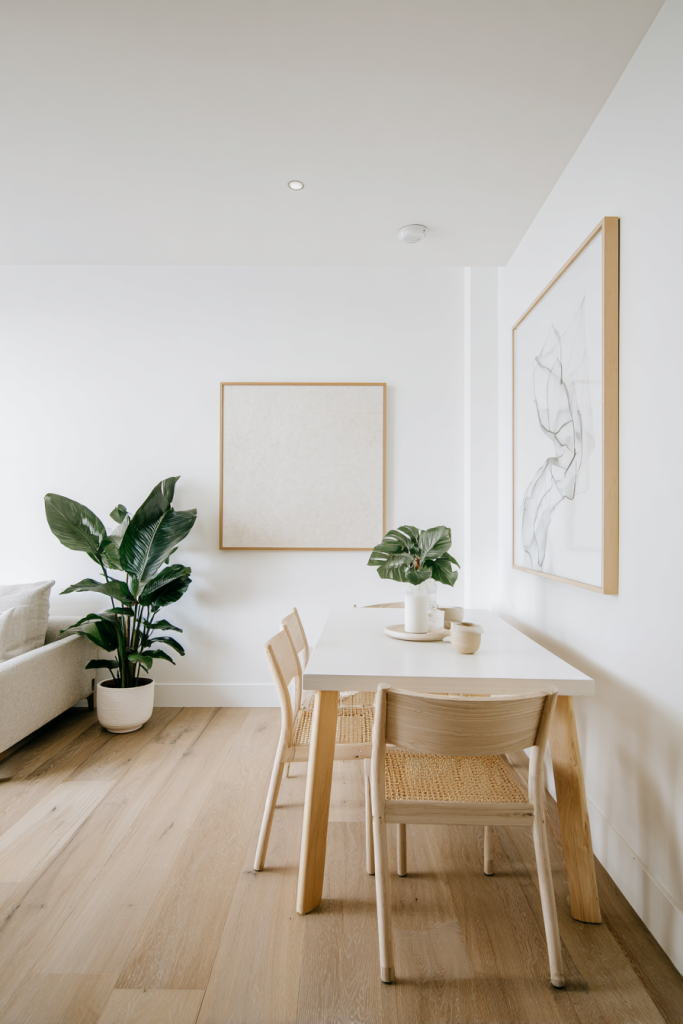
Choose a few statement pieces instead of many small items.
A single large piece of artwork makes more impact than a gallery wall in narrow spaces. Three substantial plants create ambiance better than a dozen small ones scattered around.
This curated approach creates breathing room that narrow layouts desperately need.
Keep surfaces relatively clear. Dining tables, coffee tables, and consoles shouldn’t overflow with objects.
Display items in odd numbers. Leave negative space.
Minimalism doesn’t mean cold or sterile. It means intentional. Edited. Focused on what truly enhances your space and life.
Final Thoughts
Creating a beautiful, functional narrow living room dining room combo is absolutely achievable.
These 15 ideas prove that spatial limitations can inspire creativity. Not compromise.
From strategic furniture placement and transparent materials to lighting layers and minimalist approaches… each strategy works to maximize your space while maintaining style.
The key is understanding this: Narrow doesn’t mean less.
It means smarter, more intentional design. Where every element serves multiple purposes and contributes to the overall flow.
By implementing these concepts, you transform challenging layouts into charming, efficient spaces. Ones that feel open, welcoming, and perfectly suited to modern living.
Start with one or two ideas that resonate most with your space and budget.
Maybe it’s switching to a round table. Or adding strategic mirrors. Small changes create significant impact when applied thoughtfully.
Your narrow combo space has incredible potential. These ideas simply help you see it.
Read next: 15 Small Space Kitchen Dining Combos That Work
Frequently Asked Questions
What’s the minimum width needed for a living room dining room combo?
Most narrow combo spaces work well with a minimum width of 10 to 12 feet.
This allows for a compact sofa on one side and a small dining table opposite. With adequate walkway space between.
If your room is narrower than 10 feet? Consider using one side entirely for living. The other for a fold-down or wall-mounted dining solution.
The key is maintaining at least 30 to 36 inches of clear pathway. You need comfortable movement between zones.
How do I visually separate living and dining areas without walls?
Visual separation comes through several techniques that don’t require physical barriers.
Use different area rugs to define each zone. One under your sofa and coffee table. Another beneath your dining table.
Lighting also creates distinction. A pendant over the dining table and a floor lamp in the living area naturally divide spaces.
Furniture placement works too. Position your sofa with its back toward the dining area. Creates a subtle boundary.
Color blocking also works. Paint one zone differently or use contrasting furniture tones. This establishes clear zones while maintaining open flow.
What furniture is essential versus optional in a narrow combo space?
Essential pieces include:
- A compact sofa or loveseat
- A properly scaled dining table with chairs
- Adequate lighting for both zones
Optional items that add value include:
- Coffee table (an ottoman can substitute)
- Side tables
- Console tables
- Extra seating like ottomans or benches
Prioritize multi-functional pieces over single-purpose furniture.
For example, a dining bench with storage beats regular chairs. An ottoman with a tray beats a traditional coffee table.
Choose based on your lifestyle. If you rarely entertain formally, minimize dining furniture in favor of more comfortable living space.
How can I make my narrow combo space feel wider?
Several techniques create the illusion of width.
Paint walls and ceilings in light colors that reflect rather than absorb light.
Use mirrors strategically on long walls to reflect the space back.
Choose furniture with exposed legs rather than solid bases. They create visual lightness.
Keep flooring consistent throughout both zones. No breaks or transitions.
Hang curtains as close to the ceiling as possible. Let them extend to the floor. This draws the eye vertically.
Minimize clutter. Embrace negative space.
These combined strategies make narrow spaces feel significantly more expansive than their actual measurements suggest.
Transform your space with these proven narrow living room dining room combo ideas and make every square inch count!
