


Hosting a gathering should feel exciting. Not stressful.
But the buffet table? That thing has a way of causing last-minute panic. I’ve been there. You spend hours cooking an amazing spread, then look at your table and think… this looks like a cafeteria line.
Here’s the thing. A well-styled buffet completely changes the vibe of your party. It tells your guests you actually care about their experience. And more importantly, it lets you enjoy the night instead of hovering around rearranging plates every ten minutes.
I genuinely love setting up a beautiful buffet. It’s where function meets style. The food needs to be easy to grab, but it also needs to look stunning. When you nail the decor, the food looks more appetizing. The flow feels smoother. And nobody gets stuck in an awkward traffic jam by the dinner rolls.
In this guide, I’m sharing my 16 favorite ways to elevate your serving station. These ideas are stylish but surprisingly simple. You don’t need a professional event planner or a big budget. You just need a solid plan and a few key pieces.
Let’s get into it.
1. Start With a Neutral Foundation
A strong foundation makes everything else pop.
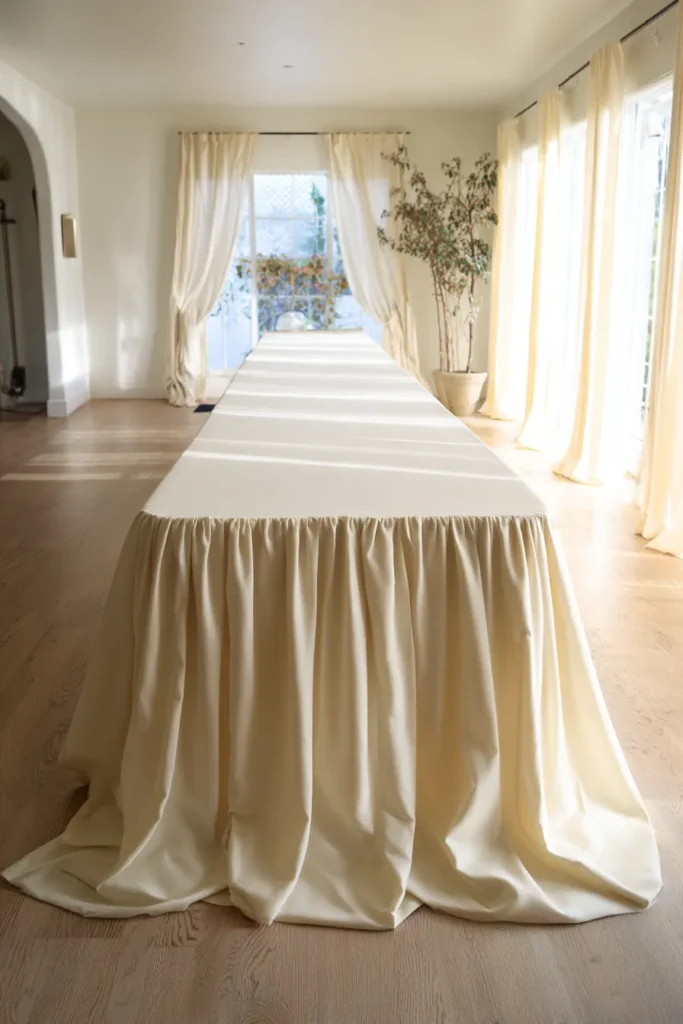
I always start with a neutral base. Busy patterns clash with colorful food. A solid base calms the visual noise instantly. You want the food to be the star of the show, not the tablecloth.
Key Design Elements: Flowing fabrics, crisp edges, a seamless drop to the floor.
Color Palettes: Ivory, soft beige, subtle charcoal gray.
Practical Tips:
- Iron your tablecloth before guests arrive. Wrinkles ruin the elegant look fast.
- Let the fabric drape evenly on all sides. It hides ugly table legs and gives the whole setup a polished finish.
2. Add Drama With a Textured Runner
Runners add instant structure without covering your entire table.
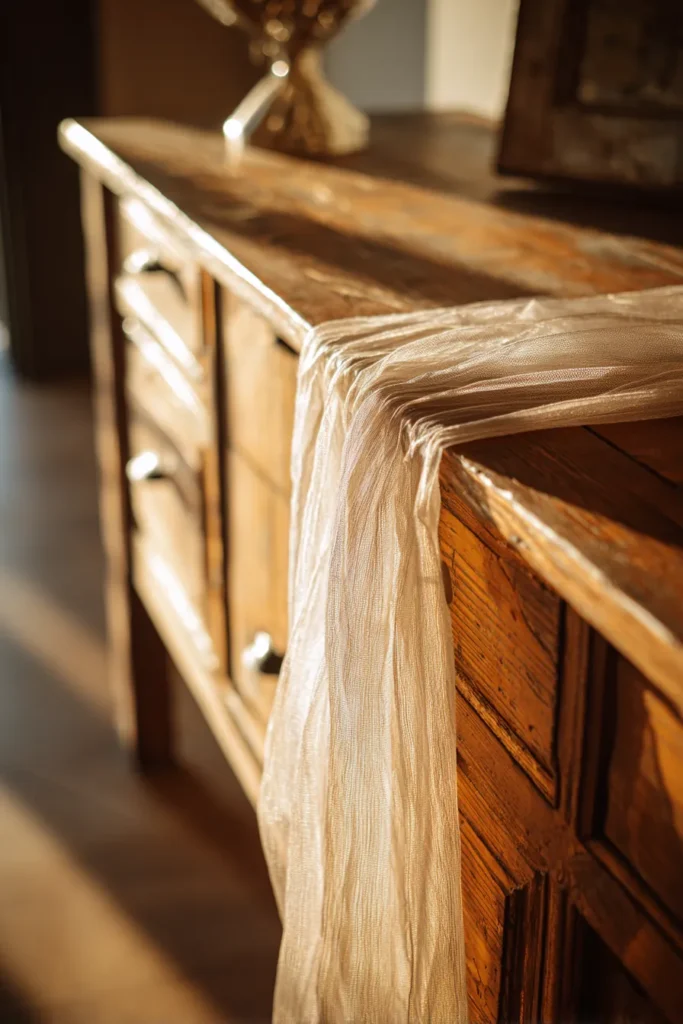
For heavy wooden tables, I actually prefer a runner over a full tablecloth. It guides the eye straight down the center. Makes the whole buffet look organized and intentional.
Key Design Elements: Woven textures, soft fringes, straight and centered alignment.
Material Suggestions: Raw linen, natural burlap, or a sheer chiffon blend.
Practical Tips:
- Center the runner perfectly before placing any dishes on top.
- Let it hang about six inches off each end. That small overhang creates a graceful, finished look.
3. Build Strategic Height Differences
A flat table is a boring table. Full stop.
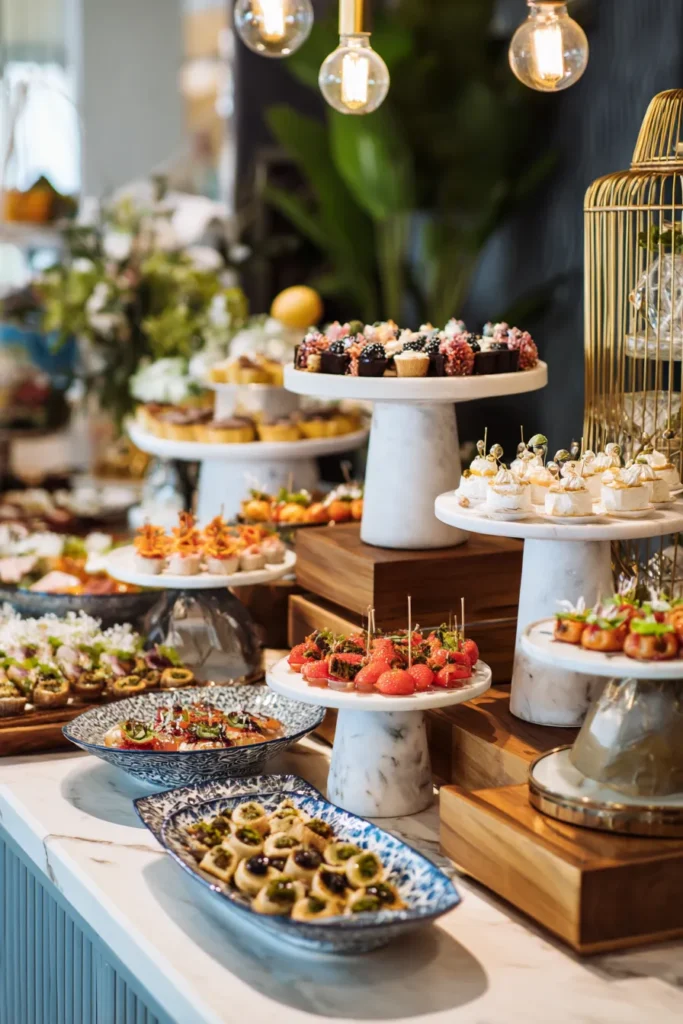
Height variation brings energy to your setup. When items sit at different levels, guests naturally scan the whole table instead of just grabbing what’s in front of them. It’s an easy trick that kills the cafeteria look instantly.
Key Design Elements: Sturdy bases, overlapping levels, balanced proportions.
Material Suggestions: Acacia wood risers, marble cake stands, sleek acrylic blocks.
Practical Tips:
- Tallest items go at the back. Flat, low platters stay near the front edge.
- No risers? Use sturdy books wrapped under a matching cloth napkin. Cheap. Hidden. Effective.
4. Anchor With a Natural Centerpiece
Every buffet needs a clear focal point.
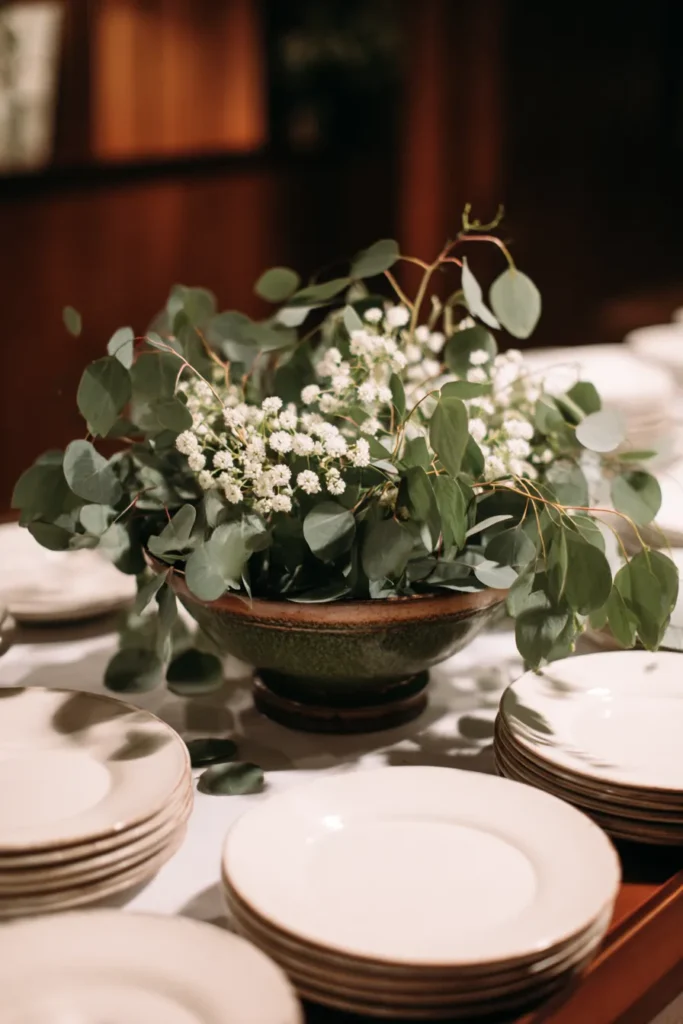
Without one, the setup just looks like a random collection of plates. A natural centerpiece ties the whole design together. It softens all the rigid serving dishes and gives the eye somewhere to land.
Key Design Elements: Low profile, organic shapes, perfectly balanced placement.
Color Palettes: Deep greens, muted whites, soft blush tones.
Practical Tips:
- Keep the centerpiece low. Guests need to reach over the table comfortably.
- Skip highly fragrant flowers. Strong scents compete with your food’s aroma. Not ideal.
5. Stick to a Cohesive Color Palette
Color chaos kills an elegant vibe fast.
I learned this the hard way. Now I strictly limit my palette to two or three colors. That’s it. The result? Even the simplest food looks intentional and gourmet.
Key Design Elements: Repeating hues, balanced contrasts, subtle tonal shifts.
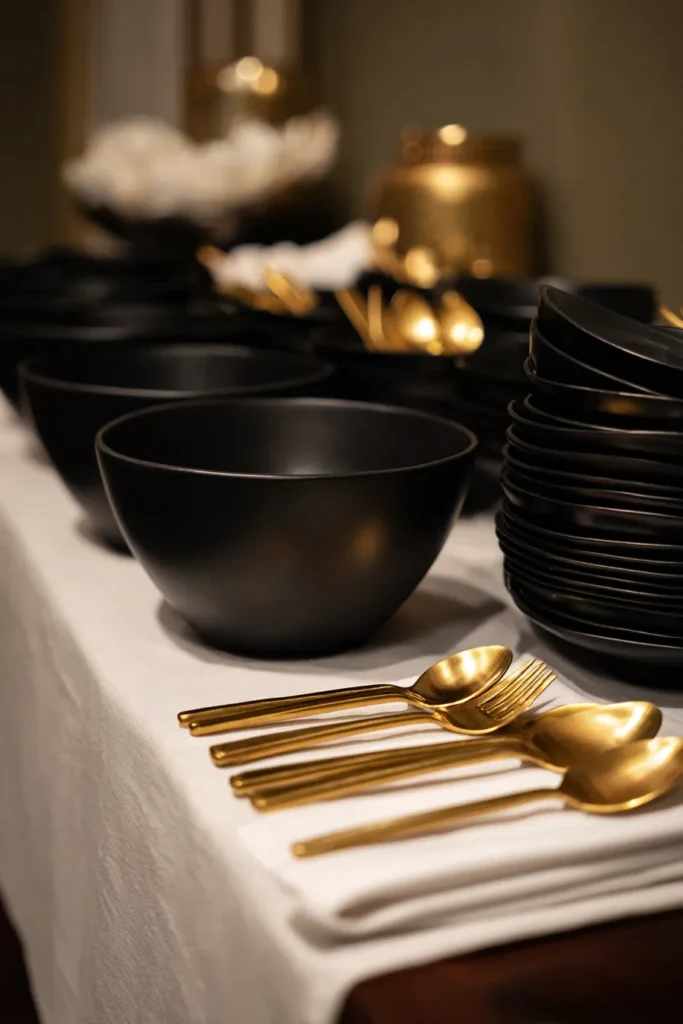
Color Palettes: Matte black, soft white, warm gold.
Practical Tips:
- Use neutral plates as your base.
- Add color through napkins, flowers, or small decor accents.
- Consistency is the real secret to high-end styling. It signals that you planned this.
6. Unify Your Serving Ware Materials
Mismatched dishes look chaotic. Quickly.
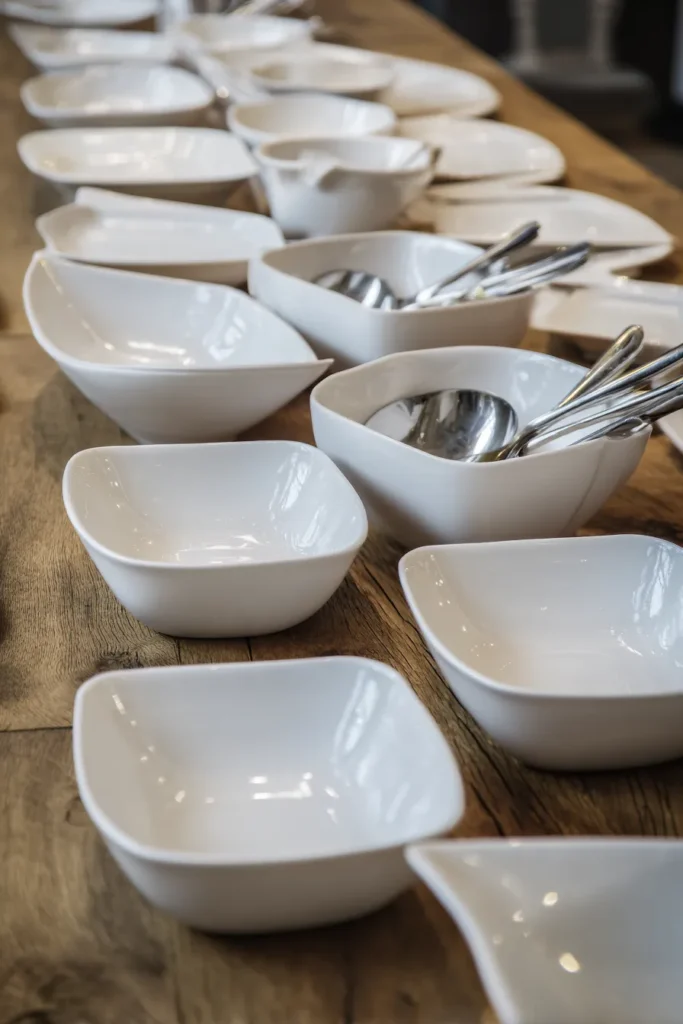
You don’t need everything to perfectly match. But sticking to one primary material brings instant polish. Think of it like wearing an outfit, not a costume.
Key Design Elements: Consistent textures, similar finishes, cohesive plate shapes.
Material Suggestions: All-white porcelain, mixed warm woods, hammered copper.
Practical Tips:
- If you’re mixing materials, group them on purpose. Wooden bowls on one side, ceramic on the other.
- This visual separation makes your table look like it was set up by a professional caterer.
7. Create Elegant Minimalist Labels
Food labels are a hosting lifesaver. I never skip them anymore.
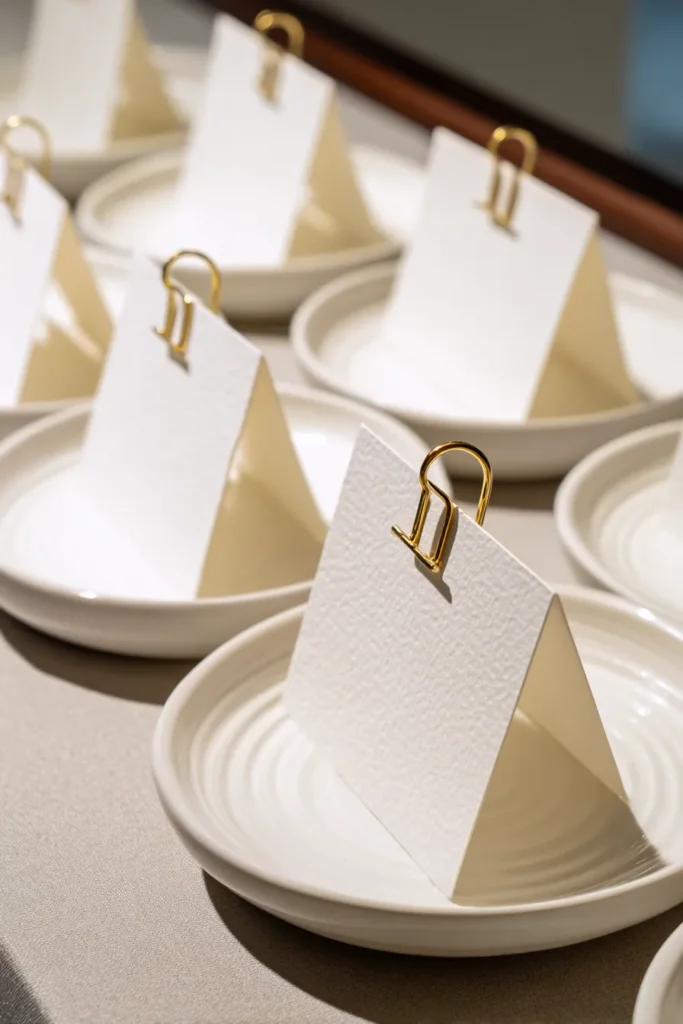
They save you from answering the same five questions all night. Is this gluten-free? What’s in this? Is there nuts? Plus, beautiful labels add a customized, thoughtful touch that guests genuinely appreciate.
Key Design Elements: Clean borders, simple card stands, elegant shapes.
Material Suggestions: Tiny brass card holders, slate tags, thick textured paper.
Practical Tips:
- Keep the design minimal. Simple is always more elegant.
- Place labels directly in front of the matching dish.
- Make sure they’re heavy enough that a breeze doesn’t send them flying across the table.
8. Incorporate Warm Ambient Lighting
Lighting sets the entire mood. And harsh overhead lights? They destroy elegance instantly.
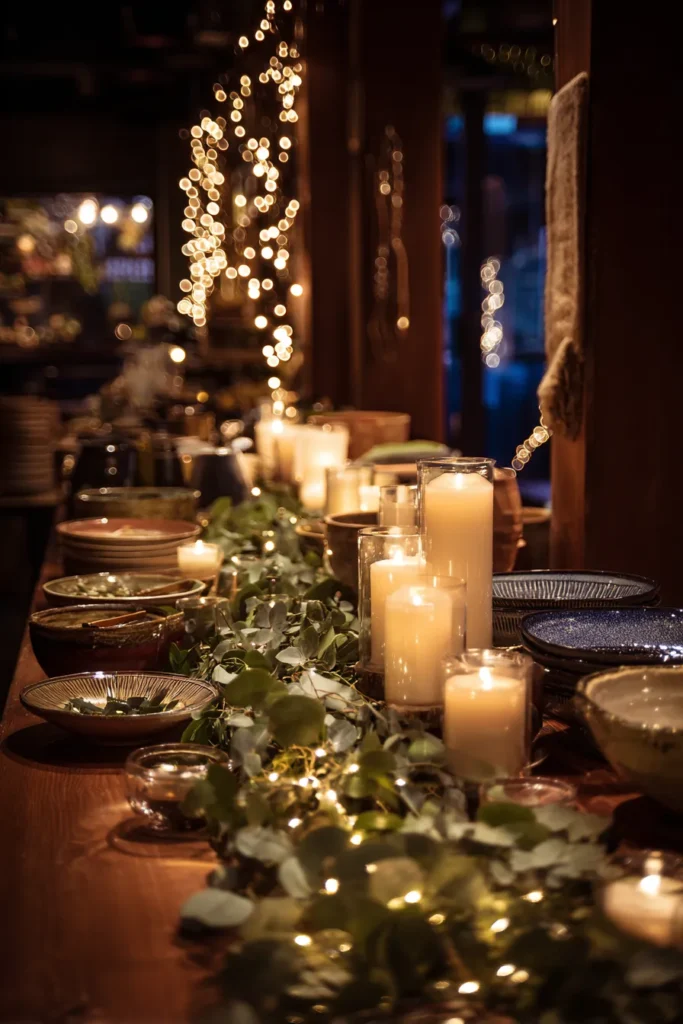
I always use warm, localized lighting near the buffet table. It makes the food look more appetizing. It adds a cozy, welcoming glow. The difference is dramatic.
Key Design Elements: Soft glows, varying light heights, hidden light sources.
Material Suggestions: LED pillar candles, warm copper fairy lights, small cordless lamps.
Practical Tips:
- Weave string lights through greenery for a magical effect.
- Use battery-operated candles to avoid fire hazards. Safety first, always.
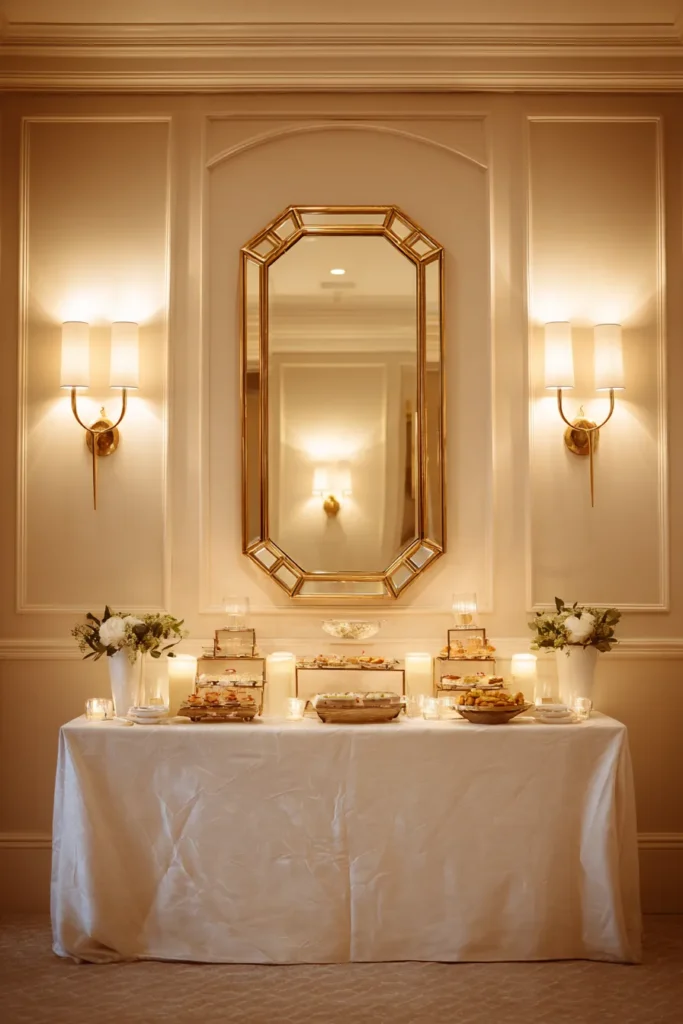
9. Frame the Space With a Backdrop
A bare wall behind your table looks unfinished. Every single time.
I love framing the whole buffet area with a backdrop. It turns a simple table into a proper food station. It anchors the space and makes the entire setup feel more intentional and important.
Key Design Elements: Vertical interest, complementary textures, balanced proportions.
Material Suggestions: Draped velvet fabric, a large framed mirror, hanging greenery hoops.
Practical Tips:
- Keep the backdrop simple so it doesn’t compete with the food.
- A large mirror is a brilliant choice. It reflects ambient light and makes the room look bigger. Two wins.
10. Style the Table Ends
I used to ignore the ends of my table. Big mistake.
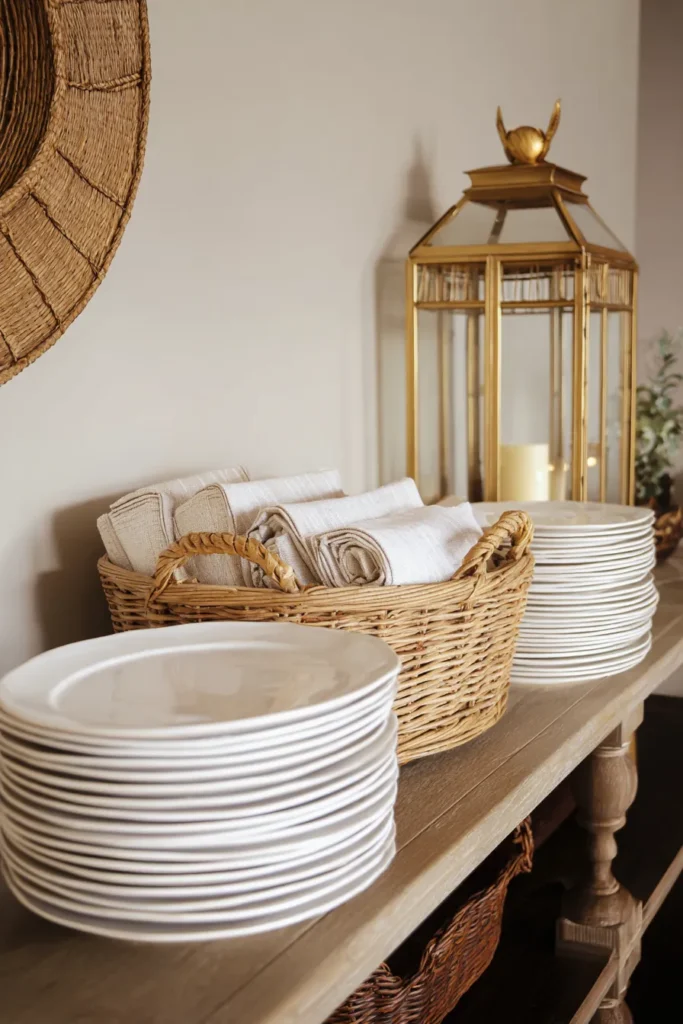
Now I treat them like decorative bookends. They frame the entire food presentation. Empty edges make an otherwise beautiful table feel strangely incomplete.
Key Design Elements: Symmetrical balance, neatly stacked items, purposeful placement.
Material Suggestions: Stacked ceramic plates, woven napkin baskets, tall decorative lanterns.
Practical Tips:
- Plates go at the starting end of the buffet.
- Napkins and utensils go at the finishing end.
- This creates a natural flow. Guests follow it without even thinking about it.
11. Elevate the Essential Utensils
Utensils are necessary. But they usually look messy.
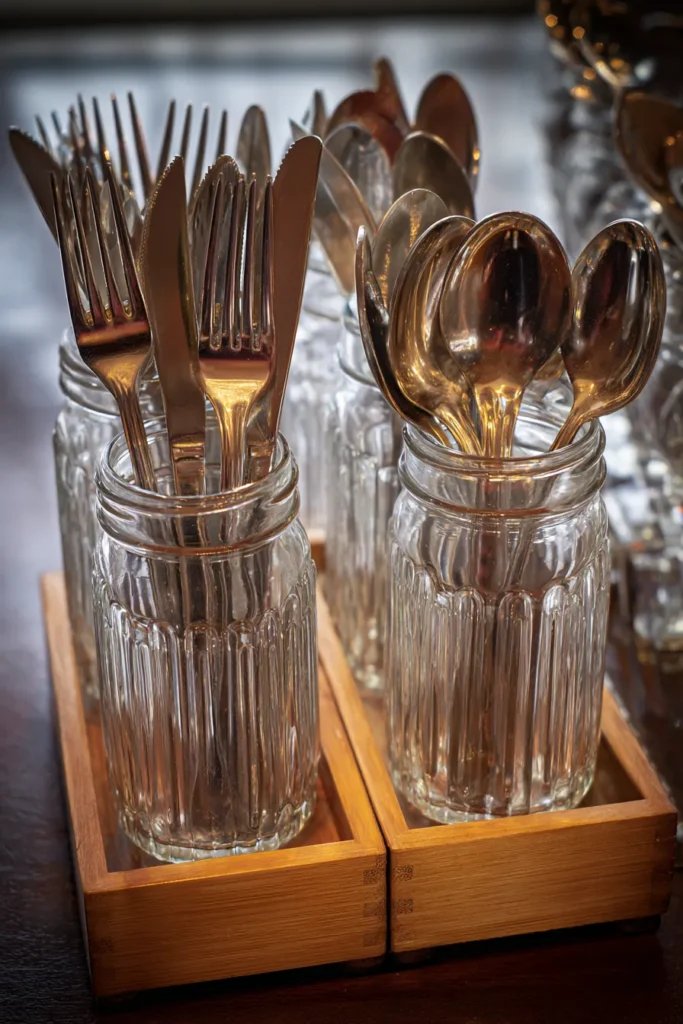
I prefer to integrate them into the decor rather than stuffing them in a drawer or tossing them in a corner. Presented well, they add unexpected charm to the whole setup.
Key Design Elements: Upright storage, distinct grouping, attractive containers.
Material Suggestions: Heavy glass cylinders, sleek ceramic crocks, divided wooden caddies.
Practical Tips:
- Group forks, knives, and spoons separately.
- Place them handle-side up for easy, sanitary grabbing.
- For a customized touch, tie small silverware bundles with elegant twine.
12. Leave Strategic Breathing Room
A crowded table stresses people out. Immediately.
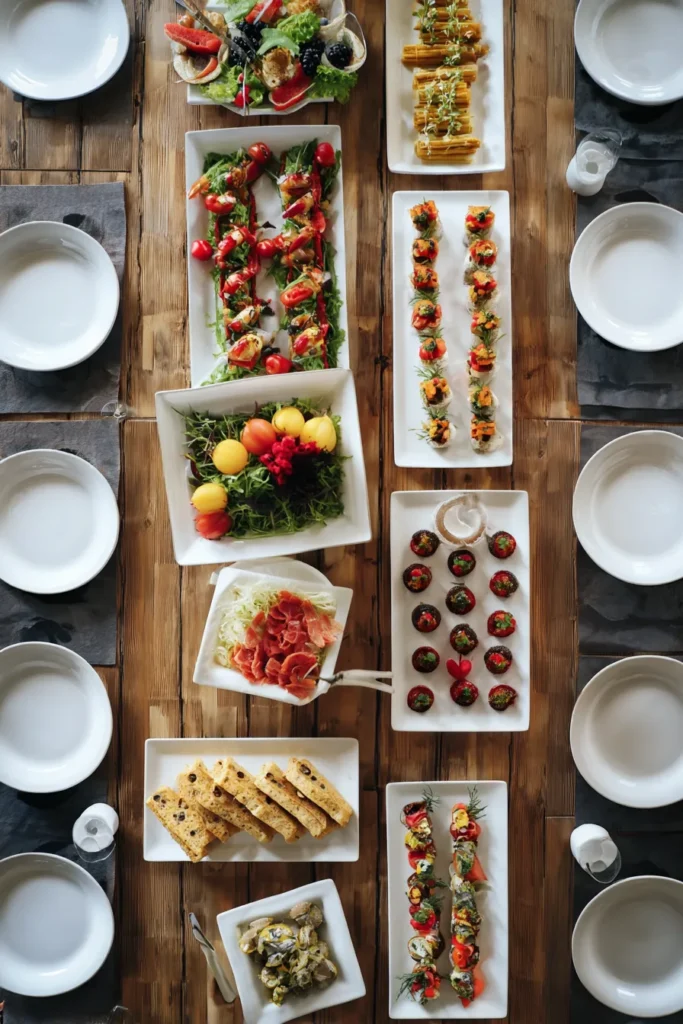
I’ve watched guests avoid entire sections of a buffet just because it looked too packed. They feared knocking something over. Negative space isn’t wasted space. It’s intentional, and it feels luxurious.
Key Design Elements: Intentional empty gaps, clear pathways, functional pairings.
Material Suggestions: Empty table surface, scattered decorative leaves, subtle runners.
Practical Tips:
- Leave at least four inches of space between major platters.
- Never let serving spoons from different dishes overlap.
- A clean, spacious layout is safer and more visually appealing.
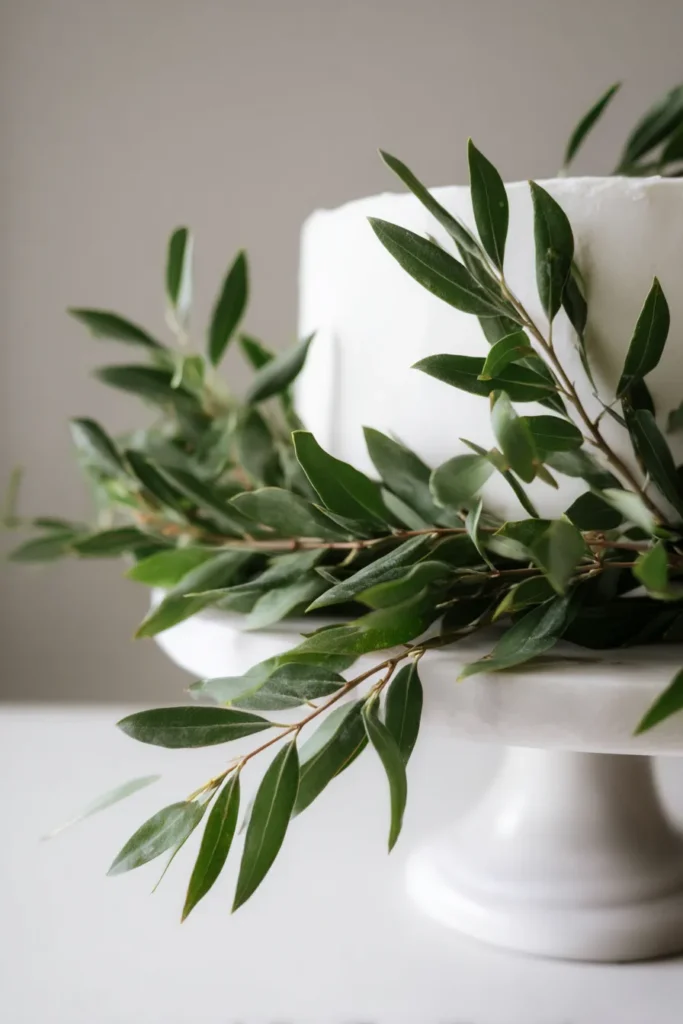
13. Add Fresh Greenery Accents
Flowers are great. But greenery is my secret weapon.
I use it to fill awkward gaps on the table. It adds life without overwhelming the senses. And unlike flowers, greenery works with literally any season or color palette.
Key Design Elements: Trailing loose vines, textured leaves, organic flow.
Material Suggestions: Fresh eucalyptus, long olive branches, trailing ivy.
Practical Tips:
- Tuck small sprigs around the base of cake stands.
- Lay a thin vine loosely around the main dishes.
- Make absolutely sure the leaves don’t touch the food itself.
14. Incorporate Subtle Metallic Details
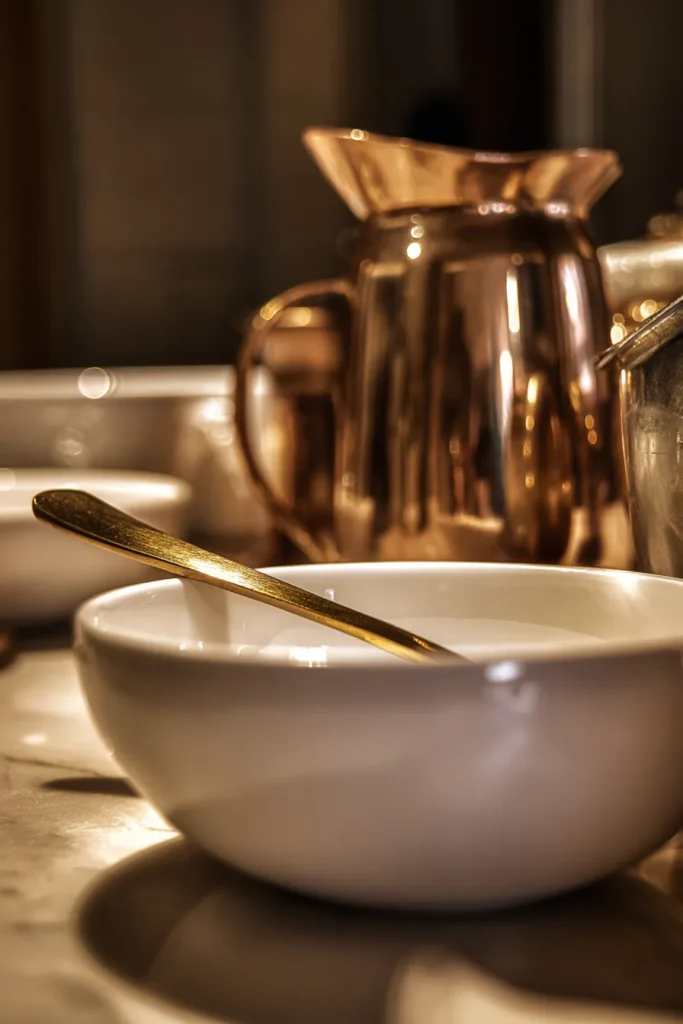
A little shimmer goes a long way. A very long way.
Metallic touches catch the ambient light beautifully. They instantly elevate the perceived quality of your whole event. The key word here is subtle. Light hand. Always.
Key Design Elements: Reflective surfaces, slender profiles, consistent finishes.
Material Suggestions: Brushed brass serving spoons, silver-rimmed plates, sleek copper mugs.
Practical Tips:
- When mixing metals, stick to a maximum of two finishes only.
- Warm gold paired with matte black = modern and sharp.
- Brushed nickel with crisp white = timeless and classic.
15. Group Similar Items Logically
A beautiful table still needs to make sense.
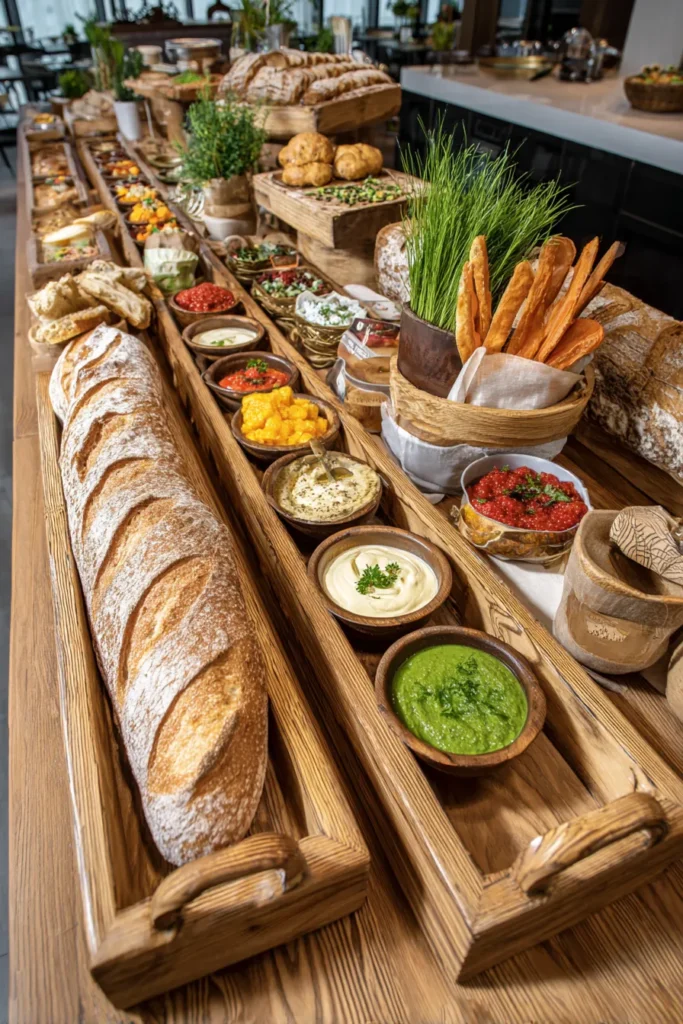
I always group complementary foods together. Placing the savory gravy right next to the sweet dessert confuses everyone. Logical grouping creates a seamless flow and keeps the line moving.
Key Design Elements: Distinct zones, clear progression, functional pairings.
Material Suggestions: Long wooden boards for breads, divided ceramic trays for dips.
Practical Tips:
- Create dedicated zones for mains, sides, and breads.
- Keep sauces directly next to their matching dish.
- Your guests won’t need a map to navigate the table.
16. Add One Signature Personal Touch
A too-perfect table can feel a little sterile. Like a hotel lobby.
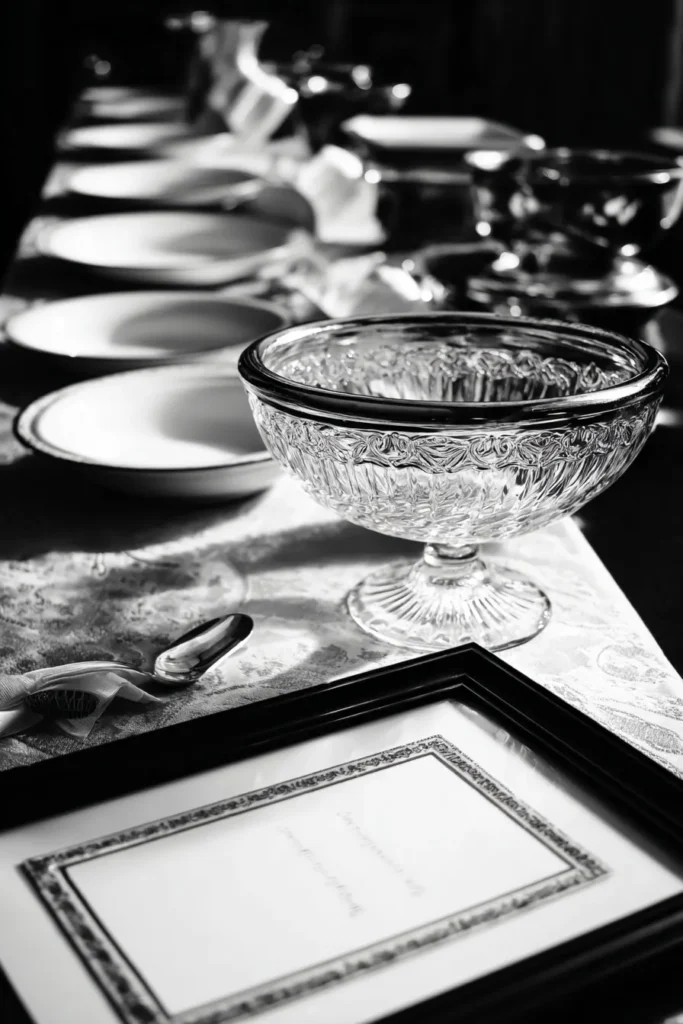
I always include one detail that feels uniquely me. It stops the setup from looking like a catalog photo. Personal touches make the event memorable. They spark conversations. They make guests feel like they’re somewhere special.
Key Design Elements: Unique artifacts, customized stationery, cherished vintage pieces.
Material Suggestions: A vintage crystal bowl, a handwritten menu, a family heirloom platter.
Practical Tips:
- Frame a handwritten menu at the start of the line. Guests love it.
- Serve your signature dish in an antique bowl.
- One special item brings the whole buffet to life in a way no purchased decor piece ever could.
Final Thoughts: Host Smarter, Not Harder
Here’s what I want you to take away from all of this.
An elegant gathering does not require a massive budget. It requires thoughtful planning. When you focus on layout, height, and lighting, the magic really does happen. Your buffet table stops being just a food station. It becomes a visual centerpiece that anchors your entire event.
I genuinely believe a well-organized setup makes food taste better. It definitely makes the hosting experience more enjoyable for you.
So before your next party, take a breath. Pick three or four of these ideas and apply them. You don’t need to do all sixteen at once. Start small. Build on it.
Your guests will notice. More importantly, you will actually get to relax and enjoy the night.
Frequently Asked Questions
How much does it cost to pull off an elegant buffet setup?
Honestly? It can cost almost nothing. Stacked books hidden under a napkin for height. A clean white bed sheet as a base. Items you already own.
If you want to upgrade a few key pieces like a linen runner or modern ceramic platters, budget somewhere between $50 and $150. That’s it.
How do I keep food warm without ruining the aesthetic?
Standard chafing dishes work but rarely look elegant. Here’s what I do instead:
- Use stylish ceramic slow cookers for hot dips.
- Serve mains in thick cast-iron dishes that hold heat naturally.
- Pre-heat your ceramic serving platters in the oven before plating the food.
Can I set up the buffet table the night before?
Absolutely. I highly recommend it.
Set out all your platters, bowls, and serving utensils the night before. Place small sticky notes inside each dish labeling what goes where. When party day arrives, you’re just filling dishes, not scrambling to figure out your layout. It’s a total stress-saver.
