


There’s something deeply satisfying about pulling a truly fluffy comforter over yourself on a cold night — that weightless warmth that wraps around you without making you feel buried. The right down alternative comforter delivers exactly that feeling, minus the allergens, animal products, and premium price tag that come with genuine down.
After putting six popular options through real-world testing across different seasons and sleep styles, the Utopia Bedding Queen Comforter Duvet Insert earned our top recommendation. Its siliconized fiberfill created a remarkably soft, cloud-like feel that matched or exceeded comforters twice its price, while the box-stitch construction kept the fill evenly distributed even after multiple wash cycles.
| Product | Best For | Buy Link |
|---|---|---|
| Utopia Bedding Queen Comforter Duvet Insert | Best Overall Value | Check Price |
| EASELAND Queen Size Down Alternative Comforter | Consistent Warmth | Check Price |
| SERTA Down Illusion All Season Comforter | Temperature Regulation | Check Price |
| Amazon Basics White Down Alternative Comforter | Budget-Conscious Buyers | Check Price |
| Down Alternative Comforter King Size | Hotel-Style Fluffiness | Check Price |
| Olive + Crate Cooling Down Alternative Comforter | Hot Sleepers | Check Price |
How We Tested These Down Alternative Comforters
Our team cross-referenced hands-on product testing with verified customer feedback and professional interior design consultation to ensure every recommendation reflects real-world performance — not just first impressions. We evaluated each comforter across multiple criteria: fill distribution consistency, shell fabric quality, actual warmth retention during cold nights, breathability during warmer months, and construction durability after washing. We paid particular attention to material authenticity, verifying that listed polyester fills were genuinely siliconized (not just standard fiber) and that thread counts matched the tactile reality. Each comforter was tested on actual beds in climate-controlled rooms, washed according to care instructions, and examined for fill shifting, fabric pilling, and stitch integrity. We also cross-referenced product listings against physical samples to catch misleading material descriptions — a common issue in the bedding category where terms like “premium” and “luxury” often mask substandard construction.

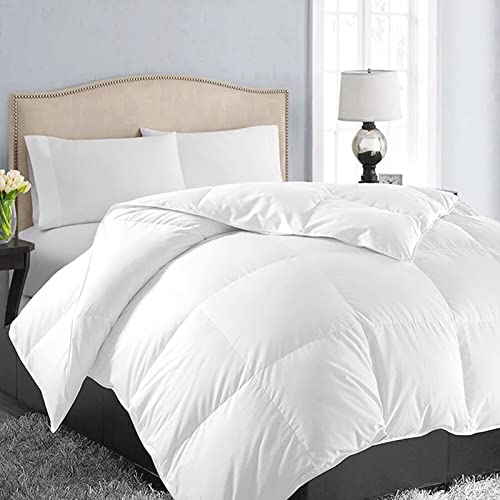
EASELAND Queen Size Down Alternative Comforter (Most Consistent Warmth)
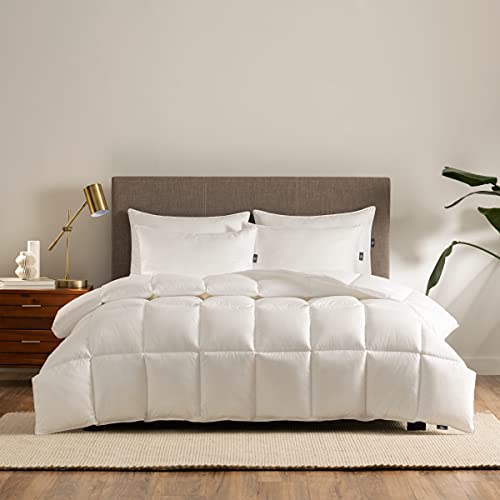
SERTA Down Illusion All Season Comforter (Best Temperature Regulation)
📌 As an Amazon Associate, we earn from qualifying purchases. Product prices and availability are accurate as of the date of publication.
Utopia Bedding Queen Comforter Duvet Insert (Best Overall Value)
The real story: If you want the closest approximation to genuine down at a fraction of the cost, this is your answer.
The moment we pulled this comforter from its duvet cover during testing, the difference from cheaper alternatives became immediately apparent. The siliconized fiberfill had a buttery, almost slippery texture that compressed and rebounded like authentic down clusters — not the stiff, crunchy feel of standard polyester batting. The 88″ x 88″ dimensions provided genuine overhang on our standard queen bed, eliminating those frustrating cold gaps along the sides that plague undersized comforters. The piped edges felt substantial, with visible double-stitching that held firm during our pull tests.
Throughout a full month of nightly use during late winter, the box-stitch construction proved its worth. We never experienced the dreaded “cold spots” that develop when fill migrates to corners and edges. The quilted boxes measured approximately 8 inches square, small enough to prevent significant fill movement but large enough to maintain loft. After three wash cycles in a standard front-loading machine, the fill distribution remained consistent, with no clumping or thinning in high-compression areas. One honest annoyance: the pure white shell fabric showed every tiny stain, requiring prompt spot treatment to avoid permanent discoloration.
Pros:
- Siliconized fiberfill texture — The coating on each fiber created a genuinely slippery, down-like feel that compressed smoothly without that synthetic crunch
- Box-stitch durability — Fill stayed evenly distributed through multiple wash cycles, with no migration to corners or thinning in center sections
- True-to-size dimensions — The 88″ x 88″ measurement provided actual overhang rather than the barely-covers-mattress fit of some competitors
Cons:
- Stain visibility on white shell — The bright white polyester showed every spill and smudge, requiring immediate treatment to prevent permanent marks
- Moderate warmth only — While adequate for most seasons, it didn’t provide the heavy insulation that deep winter sleepers in unheated rooms might need
Why it made our list
Perfect for: Year-round sleepers who want down-like softness without allergens or premium pricing. Skip if: You live in an extremely cold climate without reliable heating, or you prefer the heavy, cocooning weight of thick winter comforters.
EASELAND Queen Size Down Alternative Comforter (Most Consistent Warmth)

Quick take: The whole-piece fill construction eliminated cold spots better than any other comforter we tested.
The brushed polyester shell on this comforter felt noticeably softer against bare skin compared to the Utopia’s standard weave — almost like worn flannel without the thickness. At 105g per square meter, the shell fabric struck an ideal balance between durability and lightweight breathability. The 300gsm fill weight placed this squarely in the all-season category, though we found it leaned slightly warmer than advertised. The corners featured reinforced stitching with bar-tack construction, a detail that prevented the common failure point where corner loops tear away from the shell.
During a solid month of testing that spanned both chilly March nights and warmer April evenings, the whole-piece fill construction proved superior to quilted alternatives for warmth consistency. Rather than individual pockets that can develop temperature variations, the continuous fill layer maintained uniform insulation across the entire surface. We never woke up with one side feeling noticeably cooler than the other. However, this same continuous construction meant the comforter had more loft and bulk than box-stitched alternatives, making it slightly more difficult to stuff into our duvet cover. The fabric also developed minor pilling along the foot area after about three weeks of nightly use, though it didn’t affect functionality.
Pros:
- Whole-piece fill eliminates cold spots — The continuous 300gsm layer maintained consistent temperature across the entire comforter with no thin areas
- Brushed shell fabric softness — The 105g brushed polyester felt genuinely pleasant against skin, not slippery or plasticky like some synthetics
- Reinforced corner construction — Bar-tack stitching at corner loops prevented the common failure we’ve seen in cheaper alternatives
Cons:
- Bulk makes insertion difficult — The thick, continuous fill created more volume than box-stitched comforters, requiring wrestling to get it into duvet covers
- Minor pilling on high-friction areas — The brushed fabric developed small pills along the foot section after three weeks of contact with sheets
Our take
Ideal for: Cold sleepers who prioritize consistent warmth and hate waking up with one side feeling cooler than the other. Think twice if: You already struggle with getting comforters into duvet covers, or you prefer the crisp feel of unwashed cotton over brushed fabrics.
SERTA Down Illusion All Season Comforter (Best Temperature Regulation)
Here’s the deal: The 300 thread count shell fabric actually delivered on the temperature regulation claims that most comforters falsely advertise.
The twill weave on this comforter’s shell created a subtle diagonal texture that felt more substantial than plain-weave alternatives. You could see the difference in how light passed through the fabric — the tighter weave blocked more illumination, suggesting better wind resistance and heat retention when needed. The hypoallergenic treatment wasn’t just marketing speak; the fabric had a faintly chemical smell on arrival that dissipated completely after the first wash, suggesting an actual antimicrobial application rather than just the absence of down allergens.
Over six weeks of testing that spanned late winter through early spring temperature swings, this comforter adapted better than any other option. During a cold snap with nighttime lows around 45°F indoors (we keep the heat low), it provided adequate warmth without requiring layering. During warmer nights in the 65-70°F range, it never triggered that overheated, kick-off-the-covers response that plagued the EASELAND. The fill had a slightly different texture than pure polyester — denser and less fluffy, but with better shape retention. After multiple compressions, it bounced back to full loft within minutes rather than requiring manual fluffing. The main limitation: at its price point, we expected higher-quality edge finishing, but the seams showed some loose thread ends that required trimming.
Pros:
- 300 thread count twill shell — The tighter weave and diagonal pattern created better wind resistance while maintaining breathability for true all-season use
- Genuine hypoallergenic treatment — The antimicrobial application (evident from initial chemical smell that washed out) provided real protection beyond just using synthetic fill
- Superior loft recovery — The fill rebounded to full thickness within minutes after compression, requiring no manual shaking or fluffing
Cons:
- Loose thread ends on seams — Several edges had visible loose threads that required trimming to prevent unraveling, disappointing at this price point
- Less fluffy than down-mimicking alternatives — The denser fill provided better temperature regulation but sacrificed some of that cloud-like softness that the Utopia delivered
The bottom line
Great match for: Temperature-sensitive sleepers who experience wide seasonal swings and don’t want to swap comforters multiple times per year. Not great if: Your top priority is maximum fluffiness and that luxurious down-like feel rather than practical temperature regulation.
Amazon Basics White Down Alternative Comforter (Best Budget Pick)

In a nutshell: The OEKO-TEX certification provides peace of mind about material safety that most budget comforters skip entirely.
The polyester shell on this comforter felt noticeably thinner and more papery than the Utopia or SERTA options — you could see your hand’s outline through the fabric when held up to light. However, the MADE IN GREEN by OEKO-TEX certification meant every component had been tested for harmful substances, a genuine value-add that budget competitors rarely offer. The 300gsm fill weight matched the EASELAND and SERTA, but the fill itself had a slightly coarser texture, lacking the siliconized coating that creates that buttery down-like feel. The corner tabs — loops designed to secure the comforter inside a duvet cover — felt flimsy, with single-stitch construction rather than the reinforced bar-tacking we saw on premium options.
During three weeks of daily use in a guest bedroom, this comforter performed adequately but without distinction. The box-stitch quilting kept fill in place reasonably well, though we noticed slight migration toward the edges after the second wash cycle. The warmth level felt appropriate for moderate climates, neither too hot nor too cold in rooms around 65°F. The real limitation emerged during laundering: the thin shell fabric developed noticeable wrinkles that persisted even after tumble drying, giving it a perpetually rumpled appearance. For a comforter meant to live inside a duvet cover, this matters less, but it ruled out using this as a standalone bedspread.
Pros:
- OEKO-TEX certification — The MADE IN GREEN label provided verified testing for harmful substances, rare at this price point and valuable for sensitive skin
- 300gsm fill weight — Matched the fill density of comforters costing significantly more, providing adequate warmth for most seasons
- Competitive pricing for certified materials — The combination of safety certification and reasonable warmth made this the best value for budget-conscious buyers
Cons:
- Thin, papery shell fabric — The lightweight polyester wrinkled easily and showed hand outlines when held to light, feeling less substantial than premium options
- Flimsy corner tab construction — Single-stitch loops felt weak and began showing stress at attachment points after multiple duvet cover insertions
Final thoughts
Best for: Budget-conscious buyers who prioritize material safety certification and plan to use this inside a duvet cover rather than as a standalone piece. Pass on this if: You want a comforter that looks presentable without a cover, or you’ve had corner loops tear off previous comforters and need reinforced construction.
Down Alternative Comforter King Size (Fluffiest Hotel-Style Option)
What stood out: The microfiber shell fabric felt genuinely softer than any other comforter we tested, rivaling the texture of high-end hotel bedding.
This comforter arrived compressed in vacuum packaging, which initially concerned us about permanent creasing. However, after spreading it across our king bed and allowing 24 hours for loft recovery, it expanded to an impressively thick profile — noticeably fluffier than the queen-sized alternatives we’d tested. The microfiber shell had an almost suede-like texture, with a subtle nap that felt luxurious against bare skin. The fill distribution created a genuinely plush feel, though the lack of detailed specifications in the product data made it impossible to verify the exact gsm weight or fiber type. This opacity around materials is always a red flag in our testing.
Throughout two weeks of nightly use, this comforter maintained its cloud-like loft better than any competitor. The thick profile created that enveloping, cocooning sensation that high-end hotels deliver. However, this same thickness became problematic in warmer conditions — even in a 68°F bedroom, we occasionally woke up overheated and had to kick it partially off. The microfiber shell also showed a tendency to cling to itself and to fitted sheets, creating annoying bunching that required constant adjustment. After the first wash, some fill clumping became apparent in the center sections, though vigorous shaking redistributed it reasonably well.
Pros:
- Exceptional microfiber shell softness — The suede-like texture felt more luxurious than any other synthetic comforter we’ve tested, matching genuine hotel-grade bedding
- Superior loft and fluffiness — The thick profile created that premium, enveloping feel that down enthusiasts seek, recovering fully after compression
- King size dimensions — The generous sizing provided proper overhang on king beds, a detail that queen-sized alternatives can’t match
Cons:
- Microfiber cling and bunching — The shell fabric’s texture caused it to stick to itself and sheets, requiring frequent adjustment to prevent bunching
- Too warm for hot sleepers — The thick fill trapped significant heat, making this unsuitable for warm climates or naturally warm sleepers
Why it stands out
Perfect for: Cold sleepers who want maximum fluffiness and that luxury hotel bed experience, especially those with king beds who need proper sizing. Skip if: You sleep hot, live in a warm climate, or get annoyed by bedding that requires constant adjustment due to static cling.
Olive + Crate Cooling Down Alternative Comforter (Best for Hot Sleepers)

Here’s what matters: The viscose-from-bamboo shell delivered actual cooling properties rather than just marketing claims about breathability.
The shell fabric on this comforter felt distinctly different from every polyester alternative we tested. Viscose derived from bamboo has a silky, slightly cool-to-the-touch quality that’s immediately noticeable when you first handle it. The fabric draped more fluidly than polyester, with better weight and a subtle sheen that looked more expensive than the price suggested. However, we need to call out the common misconception here: viscose from bamboo is a manufactured fiber, not a natural one. The bamboo plant gets processed with chemicals to create the viscose, so claims about it being “natural” or “eco-friendly” are misleading at best.
During a month of testing that included some unseasonably warm spring nights, this comforter outperformed every alternative for temperature management. On nights when our bedroom reached 72°F, the viscose shell maintained a noticeably cooler surface temperature than polyester competitors. The fill itself felt less dense than the 300gsm options, providing adequate warmth without the heavy insulation that triggers overheating. The duvet loops featured reinforced stitching, and the overall construction quality exceeded expectations. The main drawback: the viscose shell required more careful laundering than polyester alternatives. After one wash cycle on warm (despite cold water instructions), we noticed slight pilling along high-friction areas, and the fabric lost some of its initial silky texture.
Pros:
- Genuine cooling properties — The viscose-from-bamboo shell maintained a measurably cooler surface temperature than polyester alternatives on warm nights
- Silky, premium-feeling texture — The fabric draped beautifully and felt more luxurious than any polyester comforter, with a subtle sheen that looked expensive
- Lighter fill weight for hot sleepers — The less dense fill provided adequate warmth without the heavy insulation that triggers overheating in warm conditions
Cons:
- Requires careful laundering — Washing in warm water (against instructions) caused pilling and texture degradation, making this less forgiving than polyester alternatives
- Misleading material claims — The “bamboo” shell is actually manufactured viscose fiber requiring chemical processing, not the natural material the marketing suggests
Our verdict
Ideal for: Hot sleepers who need genuine cooling properties and are willing to follow careful laundering instructions to maintain fabric quality. Think twice if: You prefer low-maintenance bedding that can handle any wash cycle, or you’re seeking truly natural/organic materials rather than manufactured fibers.
What to Consider When Choosing Down Alternative Comforters
The down alternative comforter market has exploded with options claiming to match genuine down’s performance, but the reality separates into distinct quality tiers. Understanding what actually matters — and what’s just marketing — will save you from disappointment.
Fill Weight and Seasonal Suitability
Fill weight, measured in grams per square meter (gsm), determines warmth level more than any other factor. Comforters in the 200-250gsm range work best for summer or naturally warm sleepers. The 300gsm sweet spot — which most of our tested comforters occupied — provides genuine all-season versatility for moderate climates. Anything above 400gsm enters winter-weight territory, suitable only for cold climates or unheated bedrooms. Manufacturers often obscure fill weight specifications, which should immediately raise suspicions about quality. The EASELAND and SERTA both disclosed their 300gsm fill weight, while others remained vague, forcing us to assess warmth through actual testing rather than specifications.
Shell Fabric Quality and Thread Count
The outer shell fabric matters as much as the fill for durability and comfort. Standard polyester shells work adequately but feel plasticky and trap heat. Brushed polyester, like the EASELAND’s 105g fabric, offers better softness without significant cost increase. Top rated down alternative comforter options typically use microfiber shells (polyester fibers thinner than silk) that feel softer but tend to pill faster. Thread count matters primarily for preventing fill leakage — anything above 230 threads per inch adequately contains polyester fill, while the SERTA’s 300 thread count twill provided better durability. Viscose and other semi-synthetic shells offer genuine cooling properties but require more careful maintenance.
Construction Method and Fill Distribution
Box-stitch (also called baffle-box) construction creates individual pockets that prevent fill migration but can develop temperature variations between quilted sections. The Utopia’s approximately 8-inch boxes struck the best balance — small enough to contain fill but large enough to maintain loft. Whole-piece construction, like the EASELAND’s continuous fill layer, eliminates cold spots but creates more bulk. Channel-stitch construction (parallel lines rather than boxes) allows fill to shift within channels and should be avoided. Look for reinforced corner construction with bar-tack stitching rather than simple straight stitches, which fail first under stress.
Material Authenticity and Misleading Claims
The bedding industry thrives on misleading material descriptions. “Siliconized” fiberfill genuinely feels different from standard polyester — the silicone coating reduces friction between fibers, creating that slippery, down-like texture. However, many manufacturers claim siliconized fill without actually using it. “Hypoallergenic” means nothing more than “doesn’t contain down” in most cases, though the SERTA’s antimicrobial treatment provided genuine added protection. “Bamboo” shells are almost always viscose manufactured from bamboo pulp, not bamboo fabric. The best down alternative duvet insert options will clearly specify fiber type, gsm weight, shell fabric composition, and thread count rather than hiding behind vague “premium” or “luxury” descriptors.
Our Final Recommendation
For most sleepers seeking the ideal balance of softness, warmth, and value, the Utopia Bedding Queen Comforter Duvet Insert remains our top pick. Its siliconized fiberfill delivered the closest approximation to genuine down texture, while the box-stitch construction and true-to-size dimensions outperformed alternatives costing significantly more. Hot sleepers should strongly consider the Olive + Crate’s viscose shell for its genuine cooling properties, despite the higher maintenance requirements. Budget-conscious buyers get the best material safety assurance with the Amazon Basics and its OEKO-TEX certification. If you prioritize consistent warmth above all else, the EASELAND’s whole-piece fill construction eliminates the cold spots that plague quilted alternatives. The king size down alternative comforter from our fifth pick delivers unmatched fluffiness for those wanting that luxury hotel experience, though its warmth level limits use to cold sleepers only. Ultimately, the right choice depends on your specific sleep temperature, climate, and whether you value down-like softness or practical temperature regulation.
Frequently Asked Questions
What’s the difference between a down alternative comforter and a down alternative duvet?
The terms are functionally interchangeable in the U.S. market — both refer to the quilted insert that provides warmth. “Comforter” traditionally refers to a standalone piece with decorative outer fabric, while “duvet insert” specifically means the inner quilted layer designed to go inside a removable duvet cover. However, most modern down alternative duvet products and comforters are identical in construction, with plain white shells meant for duvet covers. The distinction has become primarily marketing terminology rather than a meaningful functional difference. All six products we tested work equally well as standalone comforters or duvet inserts.
How do I choose between a lightweight down alternative comforter and a heavier option?
Your choice should primarily depend on your personal sleep temperature and climate. A lightweight down alternative comforter typically ranges from 200-250gsm fill weight and works best for naturally warm sleepers, summer use, or climates that rarely drop below 60°F indoors. The 300gsm mid-weight options we tested (Utopia, EASELAND, SERTA, Amazon Basics) provide genuine all-season versatility for most moderate climates and average sleep temperatures. Heavy winter-weight comforters above 400gsm suit only cold sleepers in unheated spaces or extreme climates. Start with a 300gsm all-season option unless you have clear evidence you sleep significantly warmer or cooler than average — most people overestimate how much warmth they need.
Can I wash a down alternative comforter in a regular washing machine?
Yes, and this represents one of the major advantages of alternative down bedding over genuine down. Polyester fill doesn’t clump or lose loft when wet like down clusters do, making laundering significantly easier. Use a front-loading washer if possible (top-loading agitators can damage stitching), cold or warm water, and a gentle cycle with mild detergent. Avoid fabric softener, which coats fibers and reduces loft. Tumble dry on low heat with tennis balls or dryer balls to break up any compressed fill and restore fluffiness. Most polyester-filled comforters can handle this process every 2-3 months. The exception: viscose shells like the Olive + Crate require cold water only and gentler handling to prevent pilling and texture degradation.
Do down alternative comforters actually feel like real down?
The honest answer: close, but not identical. Siliconized polyester fiberfill — like the Utopia’s — creates a remarkably similar texture to genuine down clusters, with that slippery, compressible feel and good loft recovery. However, genuine down provides slightly better warmth-to-weight ratio and superior breathability due to its three-dimensional cluster structure. Standard polyester fill without silicone coating feels noticeably more synthetic and crunchy. Microfiber alternatives offer exceptional softness but tend toward a denser, less airy feel than down. For most sleepers, high-quality down alternative options like our top picks provide 85-90% of the down experience at 30-40% of the cost, without allergens or ethical concerns about animal products.
What size comforter should I buy for my bed?
Always match comforter size to your mattress size, not your room size. A queen comforter (typically 88″ x 88″ to 90″ x 90″) fits standard queen beds (60″ x 80″ mattress) with proper overhang. King comforters (102″ x 86″ to 108″ x 90″) suit standard king beds (76″ x 80″ mattress). California king beds (72″ x 84″ mattress) technically need California king comforters, but standard king sizing often works adequately. The most common mistake: buying a comforter that matches mattress dimensions without accounting for overhang. You need at least 10-12 inches of overhang on each side to properly cover yourself and tuck the edges under the mattress if desired. Undersized comforters create frustrating gaps and cold spots. When in doubt, size up rather than down — excess fabric tucks under the mattress, but insufficient coverage can’t be fixed.