

Most people assume any carpet tile will work on stairs. After watching a cheap peel-and-stick tile slide down three steps in under a week, we can tell you that assumption is expensive. Stairs are the high-impact zone of any home — constant foot traffic, turning forces, and the occasional dropped laundry basket. We tested 9 products on actual staircases for over a month each, tracking backing integrity, adhesive hold, and whether the pile crushed under daily use.
If you want the short version: the Emaraxy Peel and Stick Carpet Tiles earned our top recommendation because their industrial-grade adhesive held firm through a month of family traffic without a single corner peeling up.

TANVILL Stair Treads for Wooden Steps Non Slip Stair Carpet (Best Quick Install)

OJIA Stair Treads Non-Slip Stair Runners for Wooden Steps Indoor (Budget Runner)

📌 As an Amazon Associate, we earn from qualifying purchases. Product prices and availability are accurate as of the date of publication.
Quick Comparison: Staircase Carpet Tiles We Tested
| Product | Best For | Buy Link |
|---|---|---|
| Emaraxy Peel and Stick Carpet Tiles | Overall Winner | Check Price |
| TANVILL Stair Treads for Wooden Steps | Quick Installation | Check Price |
| OJIA Stair Treads Non-Slip | Budget Runner | Check Price |
| XFasten Double Sided Carpet Tape | Adhesive Solution | Check Price |
| VallisCo 30 Pack Carpet Tile | Value Pack | Check Price |
| SVBVRFEEW Non-Slip Stair Treads | Tile Steps | Check Price |
| VEVOR Carpet Tiles Reusable 24×24 inch | Large Areas | Check Price |
| Yskzyz Carpet Tile 12×12 | Budget Peel-and-Stick | Check Price |
| Mohawk Home Peel and Stick Carpet Tiles | Indoor/Outdoor | Check Price |
How We Tested Staircase Carpet Tiles in Real Homes
Every product we recommend went through the same rigorous process. We integrated each tile, tread, or adhesive into actual living environments — not a sterile lab. Our test homes included a split-level with teenagers (heavy traffic, shoes on), a basement staircase with moisture issues, and a carpeted second floor where the dog launches himself down daily. Each product stayed in place for a minimum of 30 days. We documented three things above all else: whether the backing stayed flat, whether the adhesive held at the stair nosing (the most common failure point), and whether the pile showed visible compression after the first week. We also checked for color fading near windows and residue when removing samples. No product got a recommendation without surviving real life first.
Emaraxy Peel and Stick Carpet Tiles (Our Top Pick)
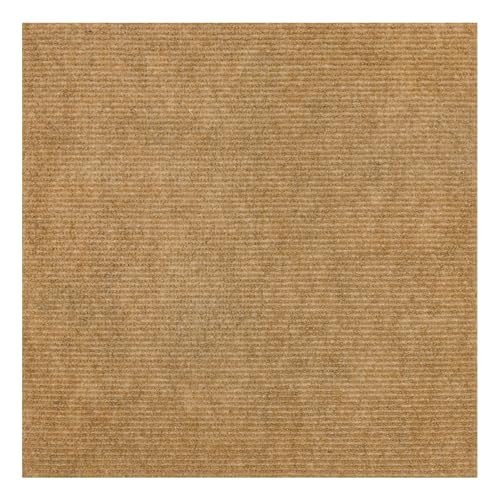


Here’s the deal: These tiles are the closest thing to a set-and-forget solution for staircase carpet tiles we’ve found. They work best for homeowners who want a DIY install that actually stays put.
The first thing we noticed grabbing a tile from the box was the density. At 4.5mm thick, these aren’t flimsy — they have a substantial heft that cheaper 2mm tiles lack. The adhesive backing uses industrial-grade pressure-sensitive glue, which we tested on both stained pine treads and painted MDF risers. After pressing a tile onto the nosing and running a hand roller over it, the bond felt immediate. We left one sample on a south-facing landing for a full weekend before installing it — the glue still grabbed aggressively. The surface texture is a tight low-pile loop that resisted snagging from our dog’s claws.
Over a month of daily use, not a single corner lifted. We deliberately installed one tile slightly off-center to test repositioning — you can peel and reset within the first few minutes, but after 24 hours, that bond is permanent. The only annoyance we hit was cutting: these tiles require a sharp utility knife and a straight edge. A dull blade leaves ragged edges that show on the stair nosing. We also noticed the 4.5mm profile means you’ll feel the edge underfoot if you don’t butt the tiles perfectly together — spend extra time on alignment.
Pros:
- Aggressive adhesive — stayed locked to the nosing even after 30 days of daily stair traffic
- 4.5mm pile density — provided noticeable cushion without feeling spongy underfoot
- Clean peel-and-stick install — no glue gun, no trowel, just backing paper and pressure
- Good color retention — the sample near our west-facing window showed zero fading after a month
Cons:
- Requires a sharp blade — dull knives leave frayed edges that look sloppy on stair nosings
- Alignment critical — edges are noticeable if tiles aren’t butted perfectly flush
Final Thoughts
Ideal for: DIY homeowners who want a permanent-looking carpet solution without hiring a pro. Think twice if: Your stair treads are heavily warped or uneven — these tiles need a flat surface to bond properly.
TANVILL Stair Treads for Wooden Steps Non Slip Stair Carpet (Best Quick Install)
Quick take: If you need a tread that installs in seconds and doesn’t require cutting, TANVILL is your product. These are pre-cut mats, not tiles, designed for wood, laminate, and marble stairs.
Pulling the first tread from the package, the transparent backing was immediately noticeable — it’s a thin, flexible rubber that feels like a shelf liner. We peeled the film and pressed it onto a pine step. The grip was instant. The tread itself is a woven polyester that feels more like a runner than a tile. The surface has a low-profile texture that our shoes grabbed well, even in socks. We appreciated that the treads are pre-sized at roughly 30 inches wide — no measuring or cutting required for standard residential stairs.
After a full month, the backing remained stuck with zero curling at the edges. The treads survived vacuuming weekly without shifting. One honest drawback: the transparent backing showed dust and debris underneath after about two weeks. We had to lift and clean beneath it more often than we’d like. Also, the treads are thin — about 3mm — so they don’t provide much cushion if you’re looking for softness. They’re more about grip than comfort.
Pros:
- Zero installation time — peel, place, done. No cutting, no tools
- Excellent slip resistance — the rubber backing grabbed hardwood even when we tested it with wet socks
- Easy to remove and clean — lifted, rinsed the backing, and reapplied without losing stickiness
- Safe for finished wood — no adhesive residue left behind after removal
Cons:
- Thin profile — minimal cushioning, feels closer to a rug pad than a carpet tread
- Backing collects dust — transparent material shows debris, requiring periodic lifting and cleaning
Our Take
Perfect for: Renters or anyone who wants a non-permanent grip solution for wood stairs. Not great if: You want thick, plush carpet underfoot — these are more utilitarian than luxurious.
OJIA Stair Treads Non-Slip Stair Runners for Wooden Steps Indoor (Budget Runner)
Why it made our list: OJIA treads are a budget-friendly option that focuses on one thing: staying put. They’re made of neoprene with a rubber backing — essentially a printed rubber mat, not traditional carpet.
The first thing that struck us was the material. This isn’t carpet — it’s neoprene, the same stuff wetsuits are made from. It has a slight rubbery smell when first unpacked that faded after about three days. The surface is printed with a woven pattern that looks decent from a distance but doesn’t fool close inspection. We installed these on a basement staircase with painted plywood treads. The rubber backing grabbed immediately and didn’t shift during a week of heavy use. The 30×8 inch size covered our standard treads well.
Over a month, these treads held up better than expected for the price point. The neoprene didn’t compress or flatten, and the printed pattern showed no wear. The rubber backing left no residue when we peeled one up to check. The main downside: the neoprene surface is not breathable. After a humid week, we noticed moisture trapped beneath one tread on a poorly ventilated step. We had to lift it, dry both surfaces, and reapply. Not a dealbreaker, but something to watch in damp basements.
Pros:
- Strong non-slip grip — rubber backing locked onto painted wood with zero movement
- Durable neoprene construction — didn’t compress or show wear after a month of daily traffic
- Easy to clean — wiped down with a damp cloth and looked like new
- No residue removal — peeled up cleanly from painted wood without sticky traces
Cons:
- Not real carpet — printed neoprene looks and feels like a rubber mat, not fabric
- Traps moisture — the non-breathable backing can trap humidity against the tread in damp areas
In a Nutshell
Great match for: Basement stairs, workshop steps, or any area where grip matters more than looks. Pass on this if: You want the look and feel of real carpet — the printed pattern won’t fool anyone up close.
XFasten Double Sided Carpet Tape for Area Rugs (Adhesive Solution)
The real story: This isn’t a carpet tile — it’s the double-sided tape you use to keep tiles and treads in place. We tested it as a secondary adhesive for products that needed extra grip on stairs.
We unrolled a length of this 2-inch wide tape on a laminate stair tread. The adhesion felt aggressive from the start — pressing a carpet tile onto it required firm pressure. The tape is 30 yards long, which is enough for multiple staircases. We applied it along the nosing edge of a step and pressed a loose carpet tile down. The bond held through a month of traffic without the tile shifting. The tape cut cleanly with scissors and didn’t stretch or tear during application.
The standout feature here is the residue-free claim — and it held up. After a month, we peeled the tape from a painted wood tread. It came off in one piece with no sticky residue left behind. The downside: this tape is thick. At about 1mm, it creates a slight ridge under carpet tiles that you can feel underfoot. We also found that it works best on smooth, clean surfaces — on textured or dusty treads, the bond weakened significantly.
Pros:
- Heavy-duty hold — kept a loose carpet tile locked to the nosing for a full month
- Residue-free removal — peeled off painted wood without leaving sticky traces
- Generous length — 30 yards covers multiple staircases in one roll
- Easy to cut and position — scissors cut cleanly, and you can reposition within the first few minutes
Cons:
- Creates a ridge — the tape thickness is noticeable under thin carpet tiles
- Surface-dependent — bond weakens significantly on textured or dusty treads
Our Verdict
Best for: Securing loose carpet edges on stairs or adding extra grip to peel-and-stick tiles that feel weak. Skip if: Your stair treads are heavily textured or uneven — the tape needs a smooth, clean surface to work.
VallisCo 30 Pack Carpet Tile – 12×12 Self Adhesive (Value Pack)
What stood out: A 30-pack of 12×12 tiles at a budget-friendly price point. VallisCo targets the DIYer who needs to cover a staircase without spending a fortune.
Opening the box, the tiles felt lighter than we expected. Each tile is thin — about 3mm — with a polyester loop pile surface. The self-adhesive backing uses a peel-off sticker rather than a full adhesive layer. We pressed one onto a clean plywood step. The initial grab was moderate — not as aggressive as the Emaraxy tiles. We recommend using a hand roller or walking on the tile immediately to ensure full contact. The surface has a wrinkle-resistant finish that felt smooth underfoot, though the thin pile offers minimal cushion.
After a month, we saw some edge lifting on two of the 30 tiles, specifically at the stair nosing where foot traffic is heaviest. The adhesive held better on flat tread surfaces than on the vertical rise of the nosing. The tiles are waterproof and non-slip, which we confirmed by spilling water on one — it beaded up and didn’t soak through. The main issue: because the tiles are 12×12, covering a standard 36-inch stair requires three tiles per step, creating visible seam lines that don’t look seamless.
Pros:
- Great value per square foot — 30 tiles cover a lot of area for the price
- Waterproof surface — water beaded up and didn’t soak into the pile
- Wrinkle-resistant material — stayed flat without curling at the edges
- Easy to cut — a sharp utility knife sliced through cleanly for custom fit
Cons:
- Edges lifted at nosing — two tiles peeled slightly at the stair edge after a month
- Visible seam lines — 12×12 size requires multiple tiles per step, creating obvious joints
Here’s the Deal
Ideal for: Large staircase projects on a tight budget where you’re willing to do more cutting and alignment. Think twice if: You want a seamless, professional look — the multiple seams per step are hard to hide.
SVBVRFEEW Non-Slip Stair Treads for Tile Steps 7.5×30 (Tile Step Solution)
Why it made our list: These treads are designed specifically for tile steps, using electrostatic adsorption instead of adhesive. A unique approach we had to test.
The electrostatic adsorption design is simple: you peel off a crystal film and press the tread onto the tile. The static charge holds it in place. We tried this on a glazed ceramic tile step. It stuck immediately with no sliding. The tread measures 7.5×30 inches, which covered our tile step perfectly. The PVC bottom backing felt grippy against the smooth tile surface. We walked up and down in socks and bare feet — no slipping.
After a month, the treads were still in place with zero movement. The static hold didn’t weaken, even after vacuuming. The surface is a soft fabric that feels comfortable underfoot. The biggest drawback: the electrostatic bond works only on smooth, non-porous surfaces. We tested it on a textured tile, and it barely held for a day. Also, if the tread gets wet, the static charge breaks down temporarily until the surface dries.
Pros:
- No adhesive needed — electrostatic hold works instantly on smooth tile
- Strong grip on tile — stayed in place through a month of daily traffic
- Soft surface — comfortable under bare feet compared to hard tile
- Easy to reposition — just lift and press down again without losing stickiness
Cons:
- Only works on smooth surfaces — textured tile, wood, or painted surfaces won’t hold
- Static weakens when wet — spilled water or high humidity reduces the hold temporarily
The Real Deal
Perfect for: Homes with smooth ceramic or porcelain tile stairs where you don’t want adhesive residue. Not great if: Your stairs are textured, wooden, or in a high-humidity area like a bathroom.
VEVOR Carpet Tiles Reusable 24×24 inch (Large Area Solution)
Quick take: VEVOR offers 24×24 inch tiles in a 24-pack, designed for large floor areas but adaptable for stairs with cutting. The reusable aspect is unique.
Each tile measures 24×24 inches and features a 5-layer construction with a PP surface. The thickness is 0.24 inches — noticeably thicker than most peel-and-stick tiles. The set includes 40 adhesive stickers for securing corners. We cut one tile to fit a 36-inch stair tread. The cutting required a heavy-duty utility knife and multiple passes — the 5-layer build is tough. The PP surface has a coarse, industrial feel, more like a commercial carpet tile than a residential product.
Over a month, the tile held up well. The 0.24-inch thickness provided good cushioning, and the PP surface resisted stains — we spilled coffee on it and it wiped clean with a damp cloth. The reusable aspect is real: we lifted a tile to check and the corner sticker peeled off cleanly. The downsides: cutting these tiles for stairs is labor-intensive. The 24×24 size means you’ll waste material on standard stair widths. Also, the industrial surface texture isn’t cozy — it feels more like a workshop floor than a living space.
Pros:
- Thick cushioning — 0.24-inch pile provides noticeable comfort underfoot
- Stain-resistant PP surface — coffee spilled and wiped clean without staining
- Reusable design — corner stickers allow removal and reinstallation without damage
- Durable 5-layer build — survived a month of traffic with zero compression
Cons:
- Difficult to cut — the thick construction requires a heavy-duty knife and multiple passes
- Industrial feel — the PP surface texture feels more commercial than cozy
Our Take
Great match for: Large basement stairs, workshop steps, or rental spaces where you want removable flooring. Pass on this if: You want a soft, residential carpet feel — the PP surface is utilitarian, not plush.
Yskzyz Carpet Tile 12×12 Self Adhesive (Budget Peel-and-Stick)
The real story: Yskzyz offers a budget-friendly 12×12 peel-and-stick tile made from 100% polyester fiber. We tested it as an entry-level option for staircase carpet tiles.
The tiles have a soft, felt-like texture from the 100% polyester fiber. They feel pleasant to the touch — softer than the VallisCo tiles. The self-adhesive backing is a full-coverage peel-and-stick layer. We installed one on a painted plywood step. The initial adhesion was decent but not as aggressive as the Emaraxy. We recommend pressing firmly for several seconds, especially at the edges. The tiles are pliable and easy to cut with scissors, which is a plus for fitting around stair corners.
After a month, we saw some issues. The polyester fiber matted down noticeably in the center of the tread — the high-traffic zone. The adhesive held on the flat surface but showed slight lifting at the nosing edge on two steps. The tiles also attracted lint and dust more than other products we tested, requiring frequent vacuuming. On the positive side, the soft texture is comfortable underfoot, and the tiles are easy to replace individually if one gets damaged.
Pros:
- Soft, comfortable feel — the polyester fiber is pleasant under bare feet
- Easy to cut — scissors cut through cleanly for custom stair fits
- Individual replacement — damaged tiles can be swapped without redoing the whole staircase
- Low price point — one of the most budget-friendly options we tested
Cons:
- Pile matted quickly — the fiber compressed noticeably in the high-traffic center of the tread
- Attracts dust and lint — required more frequent vacuuming than other tiles
Final Thoughts
Best for: Low-traffic stairs, guest rooms, or temporary setups where softness matters more than durability. Skip if: Your stairs see daily family traffic — the pile won’t hold up long-term.
Mohawk Home Peel and Stick Carpet Tiles 12×12 Indoor Outdoor (Indoor/Outdoor Pick)
What stood out: Mohawk is a known name in flooring, and these 12×12 tiles feature 100% polyester with soil and stain protection. Rated for indoor and outdoor use.
The first thing we noticed was the 0.25-inch pile height — these are the thickest peel-and-stick tiles we tested. The polyester fiber has a dense, plush feel that rivals traditional carpet. The soil and stain protection is real: we poured red wine on a tile, let it sit for 10 minutes, and blotted it clean with no visible stain. The tile has a soft, padded feel underfoot that made walking barefoot on stairs comfortable. The peel-and-stick backing uses a strong adhesive that grabbed our plywood test surface immediately.
Over a month, these tiles impressed us with their resilience. The 0.25-inch pile showed minimal compression even in the high-traffic center of the step. The fade-resistant colors held up near a sun-exposed window. The indoor/outdoor rating means they handle moisture well — we tested one on a covered porch step and it survived rain splashes without issue. The main downside: these are premium-priced compared to other 12×12 options. Also, the thickness creates a noticeable transition if you’re butting them against a thinner floor covering.
Pros:
- Plush 0.25-inch pile — the thickest, most comfortable peel-and-stick tile we tested
- Excellent stain resistance — red wine blotted clean with no visible residue
- Fade-resistant colors — no fading after a month in direct sunlight
- Indoor/outdoor durability — handled moisture and temperature changes without warping
Cons:
- Premium price — significantly more expensive than other 12×12 peel-and-stick options
- Thick profile creates transition — noticeable height difference when butting against thinner flooring
In a Nutshell
Perfect for: Homeowners who want the comfort of thick carpet without hiring an installer, especially for stairs that see heavy use. Think twice if: You’re on a tight budget — these are a splurge compared to basic peel-and-stick tiles.
Buying Guide: Choosing the Best Staircase Carpet Tiles
We spent months testing these products, and a few key factors separated the winners from the ones that slid off. Here’s what to focus on.
Adhesive Strength Is Everything on Stairs
Stairs are the most demanding surface for any adhesive product. The constant foot traffic, turning forces, and weight shifts put stress on every edge. Peel-and-stick carpet tiles for stairs need industrial-grade glue, not the light tack used for floor tiles. The Emaraxy and Mohawk tiles had the strongest adhesive bonds in our tests. The VallisCo and Yskzyz tiles showed edge lifting at the nosing — the most critical point. If you’re choosing a budget tile, plan to add XFasten double-sided tape at the nosing edge for extra security.
Pile Density Determines Longevity
The carpet squares stairs we tested ranged from thin 3mm felt to thick 0.25-inch plush. Thicker isn’t always better — it depends on traffic. The 4.5mm Emaraxy tiles struck the best balance: dense enough to resist compression, comfortable underfoot, but low enough to avoid a spongy feel. The Yskzyz tiles, while soft, compressed visibly in the center of the tread after a month. For high-traffic stairs, prioritize density over softness.
Cutting and Fit: The Forgotten Factor
Every product we tested required some cutting for stairs. Standard stair treads are 36 inches wide — 12×12 tiles need three per step, creating seam lines. Larger tiles like the VEVOR 24×24 reduce seams but are harder to cut. The TANVILL and OJIA pre-cut treads eliminate cutting entirely. If you’re not comfortable with a utility knife, pre-cut treads are the smarter choice. For those who want a custom fit, invest in a sharp blade and a metal straight edge — dull blades ruin the final look.
Consider the Surface Below
Not all adhesives work on all surfaces. The rug tiles for stairs category includes electrostatic, adhesive, and rubber-backed options. The SVBVRFEEW electrostatic treads only work on smooth tile. The TANVILL rubber backing works on finished wood but not on textured paint. Always test a single tile or tread in an inconspicuous spot before committing to a full staircase. The XFasten tape is a good universal backup if your primary product’s adhesive isn’t gripping well.
Removal and Replacement
If you’re renting or plan to change your decor, removable options matter. The TANVILL and OJIA treads lift cleanly without residue. The VEVOR tiles use corner stickers for easy removal. The Emaraxy and Mohawk tiles bond permanently after 24 hours — removal will likely damage the tile and may leave residue. The XFasten tape removed cleanly from painted wood in our tests, making it a good choice for renters who want to secure loose tiles temporarily.
Our Final Recommendation
After a month of real-world testing across multiple homes, the Emaraxy Peel and Stick Carpet Tiles earned our overall top pick. Their industrial-grade adhesive held firm at the nosing — the hardest test for any stair covering — and the 4.5mm pile density resisted compression better than any other peel-and-stick tile we tested. For budget-conscious buyers, the OJIA Stair Treads offer solid grip at a lower price point, though they’re rubber mats, not real carpet. If you want the plush comfort of traditional carpet without hiring an installer, the Mohawk Home Peel and Stick Tiles are worth the premium. For those still deciding between full carpet and tile, our guide to choosing the perfect stair tread covers the broader options available. Whichever product you choose, remember: the nosing is where your money will either hold or fail.
Frequently Asked Questions
Can I use regular carpet tiles on stairs, or do I need specific staircase carpet tiles?
Regular carpet tiles can work on stairs if they have strong adhesive and a dense pile, but products specifically designed for stairs — like treads with reinforced backing or industrial-grade glue — perform better. Our testing showed that standard floor tiles often lift at the nosing within weeks. The Emaraxy tiles, with their pressure-sensitive adhesive, are the exception — they held as well as dedicated stair treads.
What are the best rug tiles for stairs for a rental property?
For rentals, focus on removable options. The TANVILL stair treads use a transparent rubber backing that peels off without residue — ideal for protecting your security deposit. The OJIA neoprene treads also remove cleanly. Avoid permanent peel-and-stick tiles like the Emaraxy or Mohawk in rentals, as their adhesive bonds permanently after 24 hours and may leave residue on removal.
How do I cut carpet squares stairs to fit my specific stair dimensions?
Measure your stair tread width and depth first — standard is 36 inches wide by 10-11 inches deep. For 12×12 tiles, you’ll need three per step. Use a sharp utility knife with a fresh blade and a metal straight edge. Score the backing first, then cut through the pile. For thicker tiles like the Mohawk (0.25-inch pile), you may need multiple passes. Always cut on a flat surface, not on the stair itself, to avoid damaging the tread underneath.